

The evolution of the Organization of Turkic States increasingly reflects a transition from identity-based cooperation toward a more functional form of regional integration. Shared language, history and culture remain important foundations, but the organization’s agenda now extends into security coordination, transport connectivity, energy, investment and international diplomacy. Azerbaijan occupies a distinctive position within this process because it is simultaneously a South Caucasus state, a Caspian energy and transport hub and the principal territorial connection between Türkiye and the Turkic states of Central Asia. This gives Baku an interest not merely in strengthening cooperation within the Turkic world, but in ensuring that this integration reinforces rather than competes with a stable regional order in the South Caucasus.
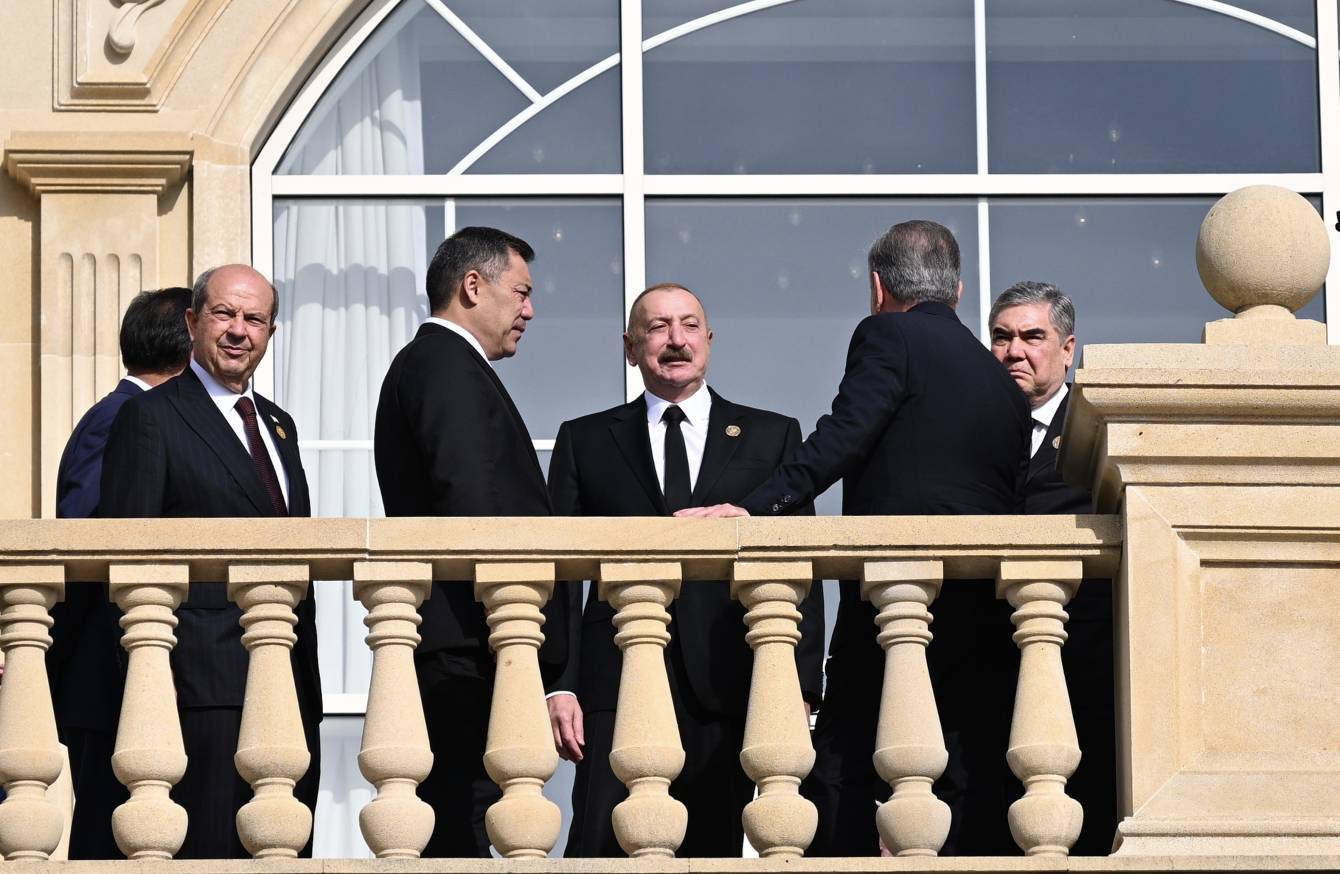
The broadening of the OTS agenda was visible during the September 17 meetings in Baku. Receiving senior security officials from member states, President Ilham Aliyev described the growing frequency of meetings across different institutional formats as evidence of increasingly active interaction inside the organization. The significance lies less in any single meeting than in the range of issues now entering the Turkic cooperation framework. Security officials, political leaders, religious representatives and economic institutions are increasingly participating in parallel mechanisms of coordination, indicating that the OTS is gradually acquiring a more multidimensional institutional character.
This evolution is particularly important in security policy. Contemporary regional security is no longer defined exclusively by military capabilities or formal alliances. Reliable energy supplies, resilient transport corridors, access to international markets and protection of critical infrastructure have become integral components of national security. Aliyev explicitly connected these areas, arguing that energy security and transport connectivity can no longer be separated from the broader concept of security.
The geography of the Turkic states gives this argument practical significance. Kazakhstan, Uzbekistan and other Central Asian economies possess significant resources and growing export ambitions, while Türkiye provides access toward European and Mediterranean markets. Between them lies the Caspian Sea and Azerbaijan. The development of trans-Caspian transport therefore transforms Azerbaijan from a national transit state into one of the principal junctions connecting the Central Asian and Anatolian components of the Turkic space.
This is also why the Middle Corridor has acquired importance beyond conventional logistics. Its strategic value lies in diversification. A transport system that provides Central Asian states with additional routes toward the South Caucasus, Türkiye and Europe reduces dependence on any single corridor and creates greater flexibility for trade and investment. Azerbaijan’s ports, railways, highways and energy infrastructure consequently become part of a much broader network whose importance increases as Eurasian states seek alternative supply chains.
Energy and transport integration reinforce one another. Azerbaijan already connects Caspian energy resources with markets to the west, while the same geographical axis increasingly supports freight flows from Central Asia. Future electricity connections and other infrastructure projects could deepen this relationship further. In this sense, OTS integration may gradually develop around physical networks rather than declarations alone: railways, ports, pipelines, electricity links and investment platforms create forms of interdependence that are more difficult to reverse than political rhetoric.
The creation of joint investment mechanisms between Azerbaijan and several Central Asian Turkic states represents another part of this process. Such instruments can move cooperation from government-level declarations toward direct participation in infrastructure, industrial and commercial projects. If this trend continues, the economic dimension of the Turkic framework could become increasingly important because member states would acquire tangible financial interests in one another’s development.
Yet Azerbaijan’s geopolitical position cannot be understood solely through the Turkic world. The country is also one of the three states of the South Caucasus, and developments in this region directly determine its security and economic environment. This is where the concept of stronger Turkic integration intersects with another possible process: the gradual emergence of a more interconnected South Caucasus.
These two directions do not have to be contradictory. A stronger Azerbaijani relationship with Türkiye, Kazakhstan, Uzbekistan and other Turkic states does not require disengagement from Georgia or prevent normalization with Armenia. On the contrary, a more stable South Caucasus could increase the practical value of Turkic integration by creating additional routes between Central Asia, the Caspian, Türkiye and European markets.
The normalization of Azerbaijan-Armenia relations is therefore relevant far beyond the bilateral peace agenda. Durable peace could make transport, trade, energy and infrastructure cooperation across the South Caucasus significantly more realistic. Connections through Armenia could supplement rather than replace existing routes through Georgia, producing a denser regional transport network and giving businesses additional logistical options. The political significance would be equally important: regional states would acquire greater capacity to manage practical questions through direct cooperation rather than treating the South Caucasus primarily as an arena for competition among external powers.
This does not imply the creation of a political bloc composed of Azerbaijan, Armenia and Georgia. Their foreign-policy orientations, alliances and security relationships remain different. A more realistic concept of Caucasus regionalism would instead be based on functional cooperation: transport, trade, energy, environmental issues, border management and other areas where geographical proximity creates shared interests irrespective of wider geopolitical preferences.
Such an approach could complement Azerbaijan’s Turkic strategy particularly well. Azerbaijan could simultaneously serve as the South Caucasus gateway toward Central Asia and as the Turkic world’s principal connection with the Caucasus. Türkiye would benefit from stronger access toward the Caspian and Central Asia, while Central Asian states would gain diversified routes toward western markets. Georgia and, under conditions of sustained normalization, Armenia could participate in a larger regional economic space without being required to become part of the OTS political framework.
This distinction is important because geography does not always correspond to political identity. Azerbaijan’s membership in the Turkic world is based on deep historical, linguistic and strategic ties, while its South Caucasian identity is an unavoidable geopolitical reality. The country therefore does not need to choose between these two spaces. Its strategic advantage lies precisely in belonging to both.
The increasing frequency of OTS summits and sectoral meetings suggests that the organization is seeking a larger international role. Azerbaijan has supported this institutionalization, including through the development of informal summit formats in addition to regular meetings. The challenge for the OTS, however, will be converting political closeness into sustainable institutions and measurable economic connectivity. Cultural affinity can facilitate cooperation, but infrastructure, capital and coordinated policies ultimately determine whether a regional organization acquires lasting strategic influence.
Security cooperation presents a similar test. The expansion of dialogue among national security institutions does not automatically transform the OTS into a military alliance, nor does the organization currently need to follow that model in order to become more consequential. Cooperation on critical infrastructure, energy resilience, transport routes, cross-border risks and information exchange can itself create a meaningful security dimension while allowing member states to preserve different external partnerships.
For Azerbaijan, this functional approach offers particular advantages. The country can deepen relations with Turkic partners without framing those ties as opposition to other regional actors. At the same time, the expansion of East-West connectivity strengthens Azerbaijan’s strategic importance to states and institutions outside the Turkic world, including Europe and Asian economic partners. The more routes and energy flows converge through the country, the broader the set of actors with an interest in its stability.
This is where the Turkic and Caucasian dimensions of Azerbaijan’s strategy ultimately converge. OTS integration gives Azerbaijan greater strategic depth toward Central Asia and Türkiye. South Caucasus normalization can provide greater stability and connectivity in Azerbaijan’s immediate neighborhood. Each process can increase the value of the other.
The most consequential long-term scenario would therefore not be the emergence of two competing geopolitical projects — a Turkic bloc on one side and a separate Caucasus system on the other. It would be the formation of overlapping networks in which Azerbaijan connects Central Asia, the Caspian, the South Caucasus and Türkiye while regional states preserve their own political identities and foreign-policy choices.
Such a model would also redefine the meaning of regional influence. Azerbaijan’s role would depend not only on military capacity, energy exports or geographical location, but increasingly on its ability to make different regional systems compatible with one another. Transport corridors, investment flows and energy infrastructure would become instruments of integration rather than simply national assets.
The broader significance of the current OTS agenda lies precisely here. The Turkic world is gradually acquiring an infrastructure of cooperation that goes beyond symbolism, while the South Caucasus is simultaneously entering a period in which new forms of regional interaction may become possible after decades of conflict and fragmentation. Azerbaijan stands at the intersection of these two processes.
Its strategic opportunity is therefore not to choose between being a Turkic state and a Caucasian state. It is to convert this dual position into a political and economic advantage. If deeper Turkic integration develops alongside lasting peace and functional cooperation in the South Caucasus, Azerbaijan could become one of the principal connecting states between Central Asia, the Caspian, the Caucasus, Türkiye and Europe.
That would give the OTS greater geopolitical substance while also offering the South Caucasus a model of regionalism based less on competing spheres of influence and more on connectivity. For Baku, the two objectives are not mutually exclusive. Properly aligned, they are parts of the same strategy.