

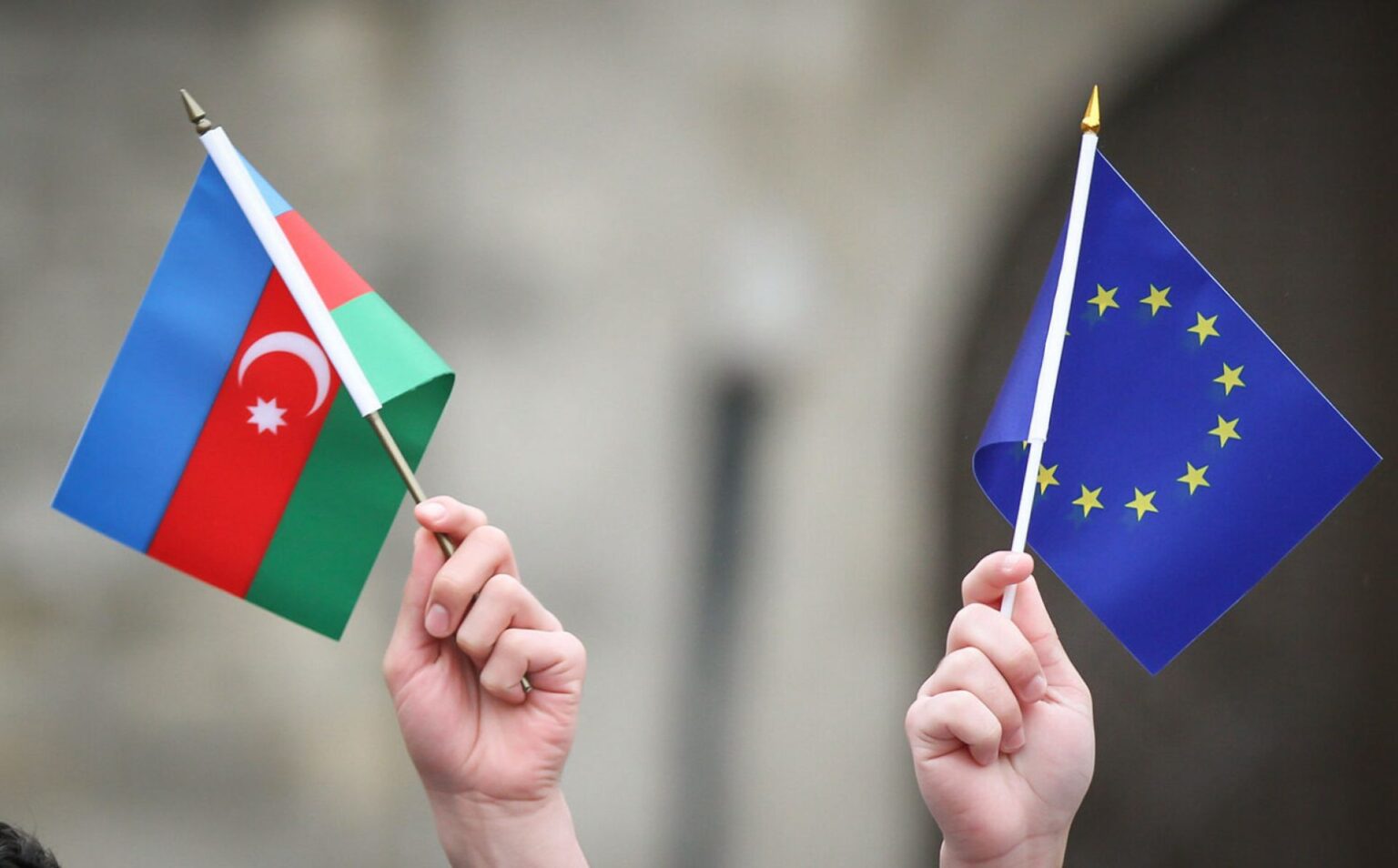
The visit of the President of the European Council, António Costa, to Azerbaijan and his negotiations with President Ilham Aliyev represent an important political signal for the future trajectory of relations between Baku and the European Union. The joint press statement released after the talks can be viewed as a strategic document that marks the transition of Azerbaijan–EU relations into a new phase.
It should be emphasized that documents of this nature are not the product of a single meeting. They emerge from a sustained diplomatic process and the gradual accumulation of political trust between the parties. The foundations for the current stage of cooperation were laid during earlier engagements between Azerbaijan and the European Union, including meetings between the leaders in May 2025 in Tirana and in October of the same year in Copenhagen. Numerous working-level visits by officials from both sides also played an important role, particularly in discussions focused on energy cooperation, regional security, and transport connectivity.
The steady expansion of political dialogue and institutional contacts has gradually created a positive dynamic in bilateral relations. This evolving momentum ultimately made it possible to elevate cooperation to the level of strategic partnership, a development reflected in the joint statement issued in Baku.
A central element of the document is the confirmation of the strategic nature of cooperation between Azerbaijan and the European Union. The statement emphasizes that the partnership is based on the principles of mutual respect, equality, and mutual benefit. In this sense, the relationship between the two sides is framed not merely as pragmatic economic interaction but as a long-term partnership grounded in converging strategic interests.
The document also pays particular attention to issues of regional stability. The joint statement positively notes ongoing efforts aimed at normalizing relations between Azerbaijan and Armenia and highlights diplomatic initiatives designed to achieve lasting peace in the region. In addition, it refers to the extensive reconstruction and recovery work underway in Karabakh and Eastern Zangezur. In practical terms, this reflects recognition of the political and geopolitical realities that have emerged in the region following the end of the conflict.
Energy cooperation remains a major pillar of the Azerbaijan–EU relationship. The statement underscores Azerbaijan’s role as a reliable supplier of energy resources to European markets. Although energy cooperation between the two sides has existed for many years, its strategic importance has grown significantly in recent times. Amid ongoing transformations in global energy markets and rising geopolitical instability in several key regions, Azerbaijani oil and gas supplies have become an increasingly important component of Europe’s energy security.
Another key dimension of cooperation concerns the development of transport and logistics corridors. The joint statement highlights Azerbaijan’s leading role in the formation of regional connectivity infrastructure linking Europe with Central Asia. Particular attention is given to projects associated with the Middle Corridor, the modernization of railway infrastructure, and other initiatives aimed at expanding the region’s transit capacity. At a time when traditional routes between Europe and Asia are facing political and logistical constraints, the importance of transport corridors passing through the South Caucasus has increased considerably.
At the same time, cooperation between Azerbaijan and the European Union is gradually expanding beyond the traditional areas of energy and transport. The joint statement outlines intentions to broaden collaboration in a number of additional fields, including security and defense, digital transformation and innovation, trade and investment, humanitarian demining, renewable energy development and climate policy, as well as education, culture, and youth exchanges.
Taken together, the document published in Baku reflects a significant expansion in the scope of Azerbaijan–EU engagement. It signals a transition from a relationship previously centered largely on economic cooperation toward a more comprehensive strategic partnership encompassing a broad range of political, economic, and humanitarian areas.
In a wider regional context, the statement carries significance not only for bilateral relations between Baku and Brussels. It also highlights Azerbaijan’s growing role as a key actor in processes related to economic integration, energy security, and transport connectivity across the broader region linking Europe and Asia.