

The rapid expansion of American engagement in the South Caucasus is increasingly reshaping the balance of external power in a region that until recently was widely perceived as a domain of predominantly European diplomacy and economic influence. Today, a different picture is emerging. The United States is gradually taking the lead in major strategic infrastructure initiatives, while the European Union, despite its financial resources and institutional experience, is more often finding itself in the role of an observer.
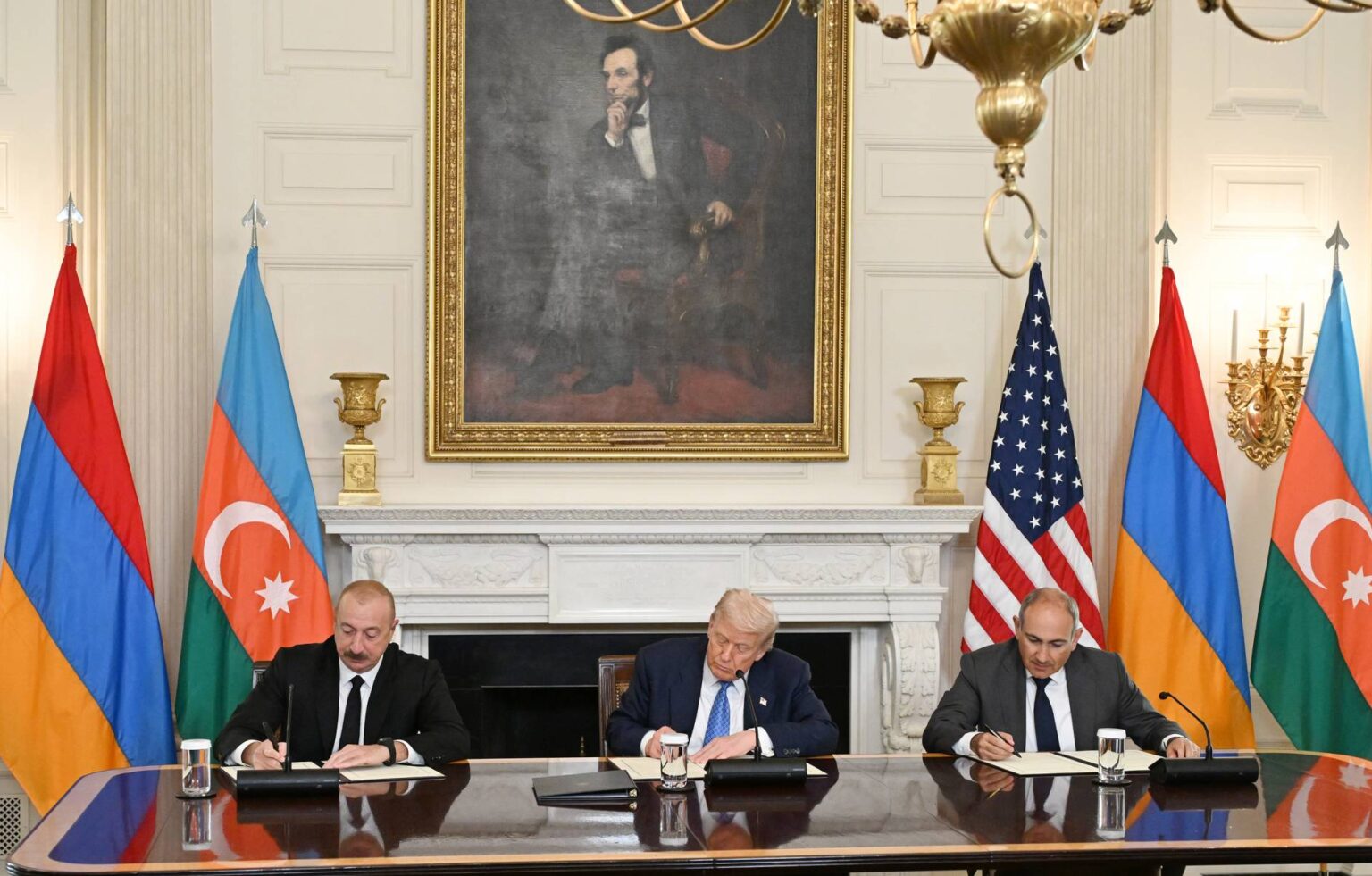
This shift has been made possible by the convergence of political interests between Washington and Baku, as well as by the personal political alignment between Ilham Aliyev and Donald Trump, which has enabled a new model of cooperation less dependent on European frameworks.
For many years, the European strategy in the South Caucasus rested on a combination of economic integration and a values-driven agenda. Brussels invested in transport programs, technical assistance, and post-conflict initiatives, yet these efforts remained fragmented and rarely translated into a coherent geopolitical vision. As competition over infrastructure corridors accelerates, such an approach has proven insufficient. While the EU focused on procedures, audits, and regulatory standards, Washington introduced a large-scale and politically charged initiative — TRIPP — which immediately established a new strategic logic in the region, where control over transport, energy, and digital flows becomes a key source of influence.
It is precisely here that the alignment of interests between Baku and the Trump administration became most visible. Azerbaijan sought to consolidate its role as a central transit hub between Europe and Asia, while the United States looked for a mechanism to strengthen its regional presence without direct military involvement. Infrastructure thus became a shared language of dialogue. White House backing for TRIPP, combined with direct engagement by senior American leadership, demonstrated that Washington was ready to act faster and more decisively than European institutions, which remain constrained by internal bureaucracy and divisions among member states.
The political philosophy of the leaders also played a significant role. Aliyev and Trump share a similar understanding of sovereignty, strong statehood, and pragmatic foreign policy. This alignment helped reduce many of the ideological tensions that had long complicated Baku’s relations with Western capitals. Unlike European elites, who traditionally linked economic cooperation with demands for internal political transformation, the new American approach has focused primarily on security, energy, and investment. Such a framework proved more compatible with Azerbaijan’s development model and enabled a rapid reset of strategic partnership.
Against this backdrop, the EU is gradually losing initiative not only symbolically but also institutionally. European projects remain relevant — whether through railway modernization or financing specific logistics programs — yet they increasingly fit into an architecture shaped by other actors. Brussels often reacts to conditions that have already been defined, while Washington and Baku set the rules of the game by shaping a new regional transport and energy framework. Even where the EU attempts to strengthen its presence through Global Gateway or cooperation with international financial institutions, it finds itself competing with the political momentum generated by American diplomacy.
The growing rapprochement between Aliyev and Trump has reinforced this trajectory. Trump’s second term has coincided with a broader crisis of the EU’s traditional foreign policy model and rising skepticism within Europe toward expanding geopolitical commitments. As a result, the South Caucasus entered a kind of strategic vacuum that the United States moved quickly to fill. For Baku, this created an opportunity to diversify partnerships and reinforce its status as a key transit state; for Washington, it offered a chance to anchor itself at the crossroads of Eurasian routes without direct confrontation with other major powers.
What is unfolding, therefore, is not merely a diplomatic episode but a deeper redistribution of influence. The EU retains financial capacity and regulatory power, yet without political decisiveness these tools risk losing effectiveness. The United States, by contrast, is betting on rapid infrastructure initiatives and leader-driven diplomacy, allowing it to seize the strategic initiative. In this new reality, the South Caucasus is increasingly becoming a space where the pragmatic alignment of Baku and Washington shapes the agenda beyond European constraints — a development that more and more observers interpret as Brussels finding itself on the sidelines of a rapidly evolving regional game.