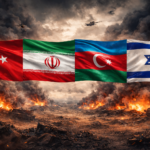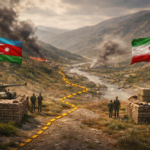



Armenia represents an exceptional case in the post-Soviet space, where structures linked to different centers of power operate simultaneously. The country hosts Russian land and air bases, a significant contingent of border troops, the European Union Mission in Armenia (EUMA), as well as emerging new security formats in the context of the Zangezur Corridor (TRIPP). This multilayered external presence complicates the understanding of the state’s strategic course and casts doubt on the possibility of pursuing a consistent policy.
In the traditional logic of regional security, states usually adhere to the dominance of a single external actor or seek neutrality. Azerbaijan, for example, has excluded foreign military presence from its territory. Armenia, however, has opted for combining incompatible elements: Western missions and Russian security infrastructure simultaneously claim the role of guarantors. This creates a structural contradiction in which any move in one direction generates tension in another.
The situation is further complicated by regional factors. For Iran, the presence of Western missions near its border creates additional discomfort: the country is already surrounded by pro-American regimes, and the Armenian vector becomes a new point of vulnerability. For Russia, key military infrastructure in the region remains non-negotiable. The United States and the European Union, despite internal fragmentation and ongoing crises, are interested in expanding their influence and view Armenia as a platform for strengthening their positions. As a result, the country is caught in the middle of competition between three power vectors at once.
The internal roots of the crisis trace back to the early years of independence. Armenia pursued foreign policy based on revisionist rhetoric and reliance on external guarantors, while ignoring the need for long-term normalization with its neighbors. This produced a model in which state sovereignty was effectively replaced by dependence on outside actors. Today, Armenian society is divided: part advocates for good-neighborly relations, while another maintains revisionist attitudes and anticipates reclaiming territorial claims once the balance of power changes.
The peace process with Azerbaijan has a key condition — amending Armenia’s Constitution. This requires a referendum and the launch of a broad political debate. The outcome will determine whether Armenian society is ready to abandon entrenched narratives in order to sign even a framework agreement. Thus, constitutional reform becomes a test of political readiness for peace.
Armenia’s current position can be described as zugzwang. State decisions are largely dictated by external pressure — whether from Washington, Brussels, or Moscow — rather than by an internally defined strategic choice. The presence of multiple external actors does not enhance stability; on the contrary, it produces additional risks: conflicts of interest are inevitable, and the coexistence of competing security formats turns the country into a field of geopolitical contestation.
Looking ahead, the only sustainable path to strengthening sovereignty lies in normalizing relations with neighbors. In such a scenario, the need for foreign military missions and “security guarantors” would diminish, and the space for external pressure would contract. Otherwise, Armenia will remain in a state of chronic dependency and political uncertainty, a trajectory that will inevitably lead to further upheavals.