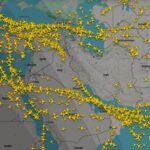


In the early hours of June 13, Israeli armed forces launched a large-scale air operation targeting Iranian nuclear facilities in Natanz and Fordow, along with military bases and major cities, including Tehran. Iran responded with mass drone attacks aimed at Israeli territory. The escalation has introduced a new layer of uncertainty into global and regional systems, with immediate consequences for commodity markets: oil prices surged, gold hit record highs, and gas markets entered a cautious holding pattern. Once again, developments in the Persian Gulf have demonstrated the inherent fragility of interconnected global economic systems.
For Azerbaijan — positioned as both an energy exporter and a strategic logistics hub — the conflict presents a mixed outlook. In the short term, rising oil prices enhance state revenues and macroeconomic stability. Yet the very same volatility makes fiscal forecasting increasingly difficult. Gains generated by favorable price dynamics may be counterbalanced by unpredictable swings in energy markets and external demand.
More structurally, the conflict exposes vulnerabilities in Azerbaijan’s trade relationship with Iran. Bilateral trade volume reached $647 million in 2024, of which $633 million accounted for Iranian imports into Azerbaijan — primarily agricultural goods, pharmaceuticals, and construction materials. As tensions rise, supply disruptions are increasingly likely, particularly in essential sectors such as medicine. These effects may be most acutely felt in Azerbaijan’s border regions, where Iranian trade plays a vital socio-economic role.
A specific concern in this context is the potential disruption of the International North–South Transport Corridor (INSTC) — a multi-modal project linking India, Iran, Azerbaijan, Russia, Central Asia, and Europe. The western route of the corridor passes through Azerbaijan, reducing transit time and distance for freight moving between the Indian Ocean and Europe. However, the current operational intensity of the corridor remains limited. Thus, although its strategic relevance is high, the immediate economic impact of a disruption may be muted. Short-term interruptions in freight traffic from Iran are likely, especially if the conflict affects infrastructure or border transit. Nevertheless, Azerbaijan’s reliance on this corridor is not yet so pronounced as to generate systemic economic damage in the near term.
On the export side, Azerbaijan’s shipments to Iran remain marginal — only about $14 million in 2024 — limiting the potential fallout from Iranian market access restrictions. If the crisis endures, Baku could turn to alternative import sources with relative ease. Still, such a shift would necessitate logistical recalibration and potentially higher costs.
Beyond trade and transit, broader regional security concerns loom. The Persian Gulf remains a vital artery for global energy flows, with roughly a quarter of the world’s oil exports passing through its waters. Any disruption — whether the closure of the Strait of Hormuz, attacks on tankers, or damage to coastal terminals — would reverberate globally. For the South Caucasus, these dynamics create both risks to existing supply routes and opportunities to serve as alternative corridors, particularly if infrastructure is modernized and diversified in response to shifting demand.
Gold, as a traditional safe-haven asset, has also appreciated amid the turmoil — rising more than 1% in the hours following the airstrikes. Natural gas markets, less directly affected due to their reliance on pipeline infrastructure, showed less dramatic movement. Azerbaijan’s gas exports to Europe are unlikely to face immediate disruption, though second-order effects — such as price volatility or market rebalancing by larger suppliers — remain plausible.
Iran’s continued use of shadow channels to export oil, despite international sanctions, introduces further complexity. A complete shutdown of these routes could both elevate global prices and increase reliance on illicit networks, some of which may intersect with regional actors. For Azerbaijan, this heightens the importance of customs vigilance and regulatory oversight, particularly at a time of shifting geopolitical alliances and security concerns.
Finally, the broader regional investment environment may deteriorate if the conflict intensifies. Heightened risk perceptions could slow down infrastructure financing, reduce foreign direct investment, and challenge long-term planning efforts across the South Caucasus. Initiatives such as energy cooperation, digital connectivity, and regional transport development may face delays or require reconfiguration in light of a new security reality.