

Amid the ongoing escalation between Iran and Israel, the question of Tehran’s endurance has taken on strategic significance. With each new volley of ballistic missiles and wave of drone attacks, the central concern becomes increasingly clear: how long can the Islamic Republic sustain offensive operations without depleting its military capacity and tipping into strategic exhaustion?
According to several intelligence assessments, Iran possessed a substantial missile arsenal prior to the outbreak of hostilities — reportedly over 2,000 ballistic missiles of various ranges. On paper, this allows for sustained pressure over the span of several weeks. However, the mere stockpiling of munitions does not equate to operational capability. The vulnerability of logistics networks, limited availability of mobile launchers, and the exposure of storage and launch facilities to enemy airstrikes significantly narrow Iran’s effective operational window.
The quality of missile systems also plays a pivotal role. Despite incremental advancements, a significant portion of Iran’s arsenal is based on modified Soviet or North Korean platforms, limiting their accuracy and resilience against advanced missile defense systems. At the same time, Tehran has steadily shifted toward solid-fuel systems — such as the Fateh-110 and its derivatives — which offer quicker launch readiness and form the core of Iran’s rapid-response strike doctrine.
The deepening conflict has also revealed Tehran’s technical ambitions: for the first time, Iranian forces reportedly employed new-generation hypersonic missiles with maneuverable reentry vehicles. Yet the lack of transparent data on their quantity and readiness raises doubts about their reliability and scale of deployment.
Unmanned aerial vehicles (UAVs) remain another cornerstone of Iran’s asymmetric strategy. In recent years, drones have served as Tehran’s tool for exerting extraterritorial pressure, from Yemen to the Red Sea. Iran’s ability to mass-produce UAVs — often via decentralized networks beyond its borders — allows for partial substitution of missile strikes with drone swarms. However, Israel and the U.S. have adapted their multi-layered air defenses to rapidly detect and intercept low-signature threats, gradually reducing the strategic surprise element of drone warfare.
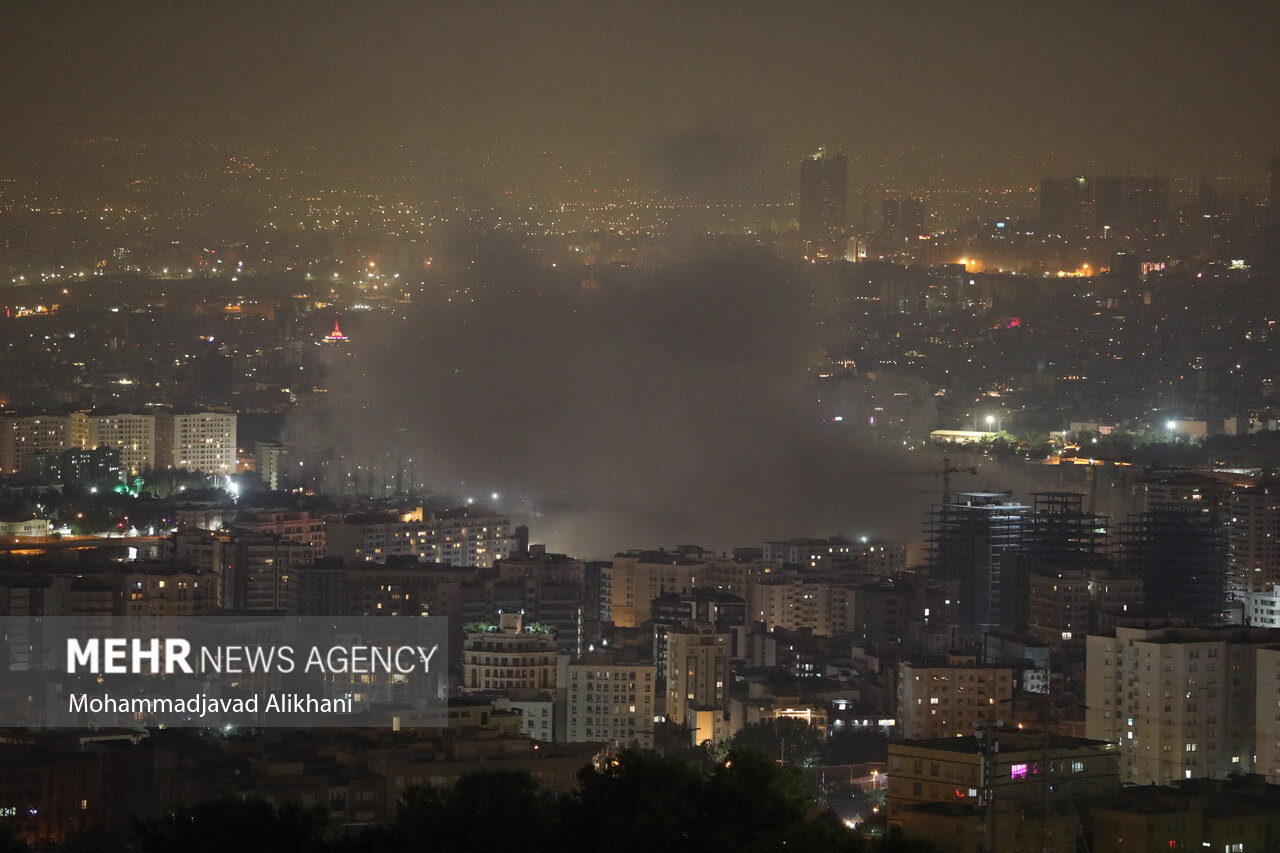
Iran’s greatest vulnerability, from a military perspective, lies in its infrastructure for missile preparation and launch. Within the first days of the conflict, Israel targeted sites in Hamadan, Kermanshah, and near Isfahan. The destruction of dual-use facilities and the disruption of missile logistics could severely impede Tehran’s ability to sustain coordinated attacks.
Meanwhile, Israel continues to rely on one of the most advanced, deeply integrated air and missile defense systems in the world. Iron Dome, David’s Sling, Arrow-2 and Arrow-3, along with U.S.-supplied Patriot and THAAD systems, create a dense aerial shield that blunts the impact of massed salvos. Furthermore, although the United States has not formally entered the conflict, it plays an active role in supporting Israeli defense — including direct interception of aerial threats over Israel and regional U.S. assets.
In practical terms, the U.S. is now a de facto participant in the conflict. From deploying F-35 squadrons and Aegis-equipped ships to reassigning Patriot batteries from the European theater to the Middle East, Washington has reinforced its strategic posture. While this redeployment triggered political friction — particularly regarding diminished air defense coverage for Ukraine — Pentagon officials justified the shift as essential to protecting U.S. interests and allies in the Middle East.
Iran’s internal resources — both material and political — are constrained. The country’s economy remains under severe sanctions, and the domestic political climate is marked by rising public discontent. While Iran retains certain mobilization capacities, its ability to sustain high-intensity operations under international isolation remains in question.
In essence, Tehran finds itself in an asymmetric and attritional confrontation with a highly advanced Israeli military and, indirectly, the full force of the United States. Without substantial external support, and if current levels of intensity are maintained, Iran risks a forced operational slowdown or even a transition to a purely defensive posture within weeks.
The outcome of this confrontation is not determined by the sheer number of missiles, but by the depth of strategic resilience. And today, it is precisely that resilience that appears to be Iran’s most critical vulnerability.