

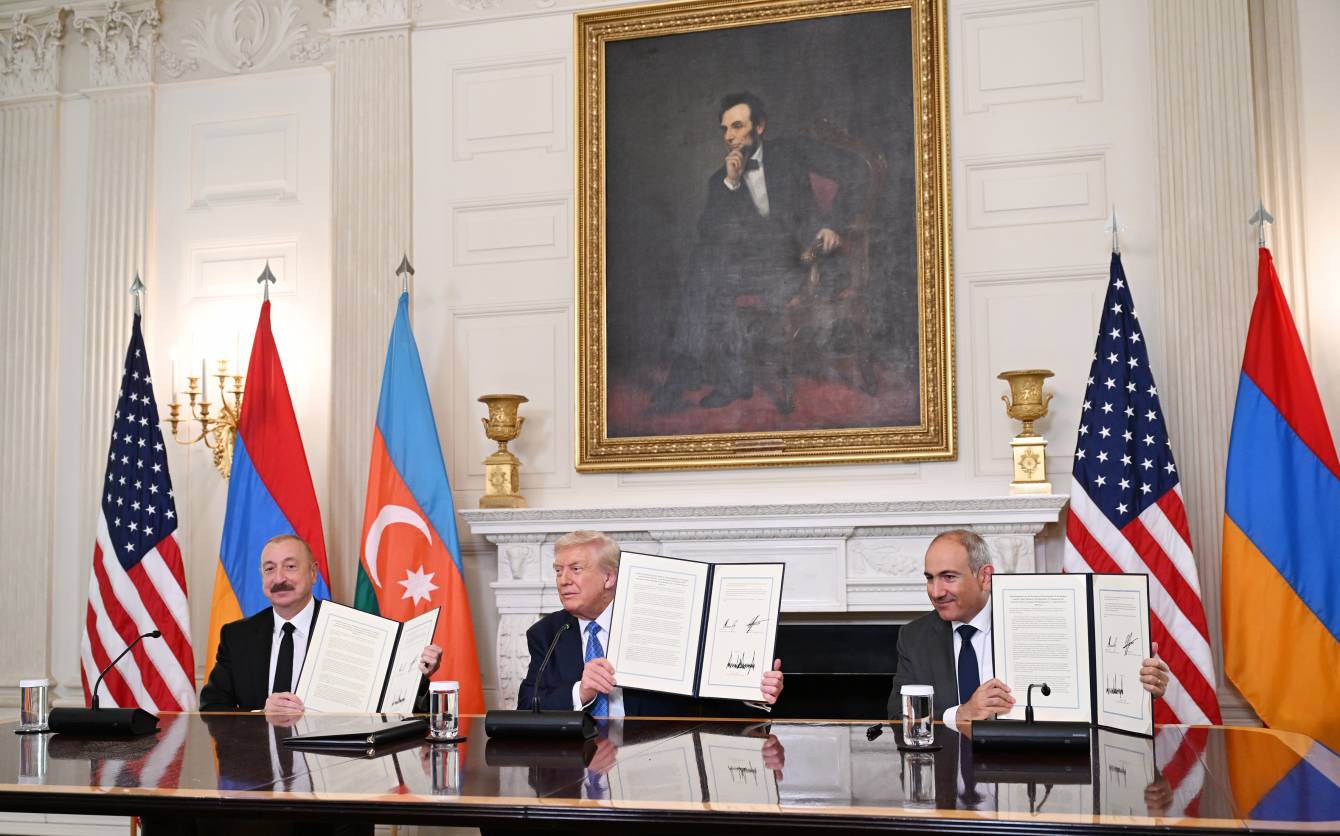
The anniversary of the Washington Peace Summit was not merely an occasion to take stock of the Azerbaijan-Armenia normalization process. Its significance was much broader. Over the past year, the peace process between Azerbaijan and Armenia has effectively moved from the stage of diplomatic negotiations into a new phase — the gradual formation of a regional reality in which a return to the old confrontation is becoming increasingly unnatural, while peace is acquiring not only political but also economic, transport and strategic substance.
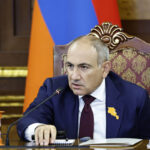
In this context, particular significance should be attached to the telephone conversations President of Azerbaijan Ilham Aliyev held on August 8 with U.S. President Donald Trump and Armenian Prime Minister Nikol Pashinyan. Formally, both conversations were timed to coincide with the first anniversary of the Washington Summit of August 8, 2025. Their substance, however, demonstrated how profoundly the logic of regional relations has changed. Only a few years ago, almost any contact between Baku and Yerevan was viewed through the prism of war, territorial disputes and the threat of renewed escalation. Today, the leaders are discussing trade, transit, transport infrastructure, energy links and the implementation of specific regional projects.
The Washington meeting itself became the most important political point of departure for this new stage. The Joint Declaration signed with the participation of U.S. President Donald Trump, together with the initialing of the Agreement on the Establishment of Peace and Interstate Relations between Azerbaijan and Armenia, effectively formalized the transition from a decades-long conflict to a state of peace. President Ilham Aliyev subsequently stated explicitly that he regarded Azerbaijan and Armenia as countries already living in peace. One year later, this formula no longer appears to be merely a political statement and is increasingly being confirmed by developments on the ground.
The most important evidence of this is the absence, over the past year, of serious incidents capable of threatening peace and stability. After decades of wars, armed clashes, border crises and mutual accusations, the very fact that an entire year has passed without an event capable of returning the sides to military confrontation is of fundamental importance. Peace in the South Caucasus is beginning to be measured not by the number of negotiating rounds or statements by international mediators, but by the duration of normal life without war.
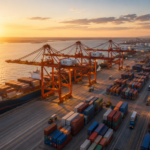
Yet the present stage is also important because the absence of hostilities is gradually being filled with concrete substance. Over the past year, processes have emerged that until very recently would have seemed almost impossible. Azerbaijan has begun exporting petroleum products to Armenia, while transit cargo is moving through Azerbaijani territory to Armenia, as well as from Armenia toward other destinations. Trade relations are gradually taking shape. Peace is therefore ceasing to exist solely at the level of presidential statements and diplomatic documents and is beginning to turn into a system of practical relations.
This is perhaps where the most important difference between the current stage and all previous attempts at settlement becomes visible. For decades, international diplomacy sought first to achieve a comprehensive political agreement, assuming that economic cooperation would follow afterward. Today, to a certain extent, the opposite process is taking place. The political and legal architecture of peace has not yet been fully completed, but economic, transport and infrastructure links are already beginning to develop. In this way, the two sides are gradually creating a reality that may itself become an additional guarantee of peace.
This is particularly important for the South Caucasus, where precisely the opposite logic prevailed for decades. Closed borders, severed communications and the absence of trade were not merely consequences of the conflict — they also reproduced the conflict. When states have no economic ties, transport routes or shared interests, the cost of political confrontation remains comparatively low. Connectivity changes this equation. The more trade, transit, transport infrastructure and mutual economic interests emerge, the higher the cost of any new crisis becomes.
This is why today’s supplies of petroleum products or individual transit shipments matter far beyond their immediate commercial value. They establish a precedent for normal interaction. After decades in which Azerbaijan and Armenia effectively existed in separate economic spaces, an understanding is beginning to emerge that peace can bring very tangible benefits. For public perceptions, this can sometimes be more important than abstract diplomatic formulas.
In the longer term, the issue concerns a much broader system of connectivity. It includes road and rail routes, energy infrastructure, data transmission lines, electricity and, potentially, natural gas, oil and petroleum products. The more such elements are integrated into relations between Azerbaijan and Armenia, the more difficult it will become to regard peace as a temporary political arrangement that could simply be revised following another change in political circumstances.
The TRIPP project acquires particular significance in this context. During his conversation with Donald Trump, Ilham Aliyev stated that work on transport infrastructure on Azerbaijani territory was nearing completion. At the same time, Aliyev and Pashinyan discussed the implementation of the route in accordance with the agreements reached in Washington. The next important question is therefore how quickly the practical implementation of the project will begin on Armenian territory.
TRIPP matters not merely as a transport route. In a broader sense, it can become one of the material symbols of a new order in the South Caucasus. If the previous regional order was defined by closed communications, war and mutual blockade, the new one must be built around connectivity, transit and trade. In this understanding, a railway or highway becomes more than an infrastructure facility; it becomes a political institution of peace.
For Azerbaijan, the issue also carries a broader geo-economic significance. The country has consistently strengthened its position as a crucial connecting link between Central Asia, the Caspian region, the South Caucasus, Türkiye and Europe. The opening of communications through Armenia does not replace existing routes or diminish their importance. On the contrary, it creates an additional network of connections, expands transport options and strengthens Azerbaijan’s role as one of the central actors in the emerging Eurasian logistics architecture.
For Armenia, normalization likewise creates an entirely new perspective. For decades, the country existed with closed borders with Azerbaijan and Türkiye, objectively restricting its economic and transport opportunities. Armenia’s integration into new regional communications can transform the country’s economic position, broaden its access to markets and turn normalization from merely a political choice by the government into a materially beneficial strategy for businesses and the population.
In this sense, peace is gradually beginning to create its own socioeconomic foundation. As long as normalization is supported only by political leaders, it remains vulnerable to internal crises, nationalist mobilization or a change of government. But once carriers, companies, investors, energy projects and jobs begin to depend on open routes, a much broader group of actors develops a direct interest in preserving stability. In the long term, such interdependence may prove to be no less important a guarantee of peace than international documents.
This does not mean, however, that all issues have been resolved. The principal remaining political and legal obstacle continues to be the question of Armenia’s Constitution and those provisions that Baku regards as potentially providing a basis for future territorial claims against Azerbaijan. For Azerbaijan, this is a matter of principle, because a final peace must rule out the possibility that, under a different political configuration in Armenia, the issue of territorial claims could once again be brought back into the legal or political sphere.
From Azerbaijan’s perspective, this is neither a symbolic demand nor an attempt to interfere in the domestic order of a neighboring state. The issue is the need to eliminate legal ambiguity. If the two countries are genuinely preparing to open a new historical chapter, their relations must rest on an unequivocal and irreversible recognition of each other’s territorial integrity. A peace agreement that leaves legal space for future reinterpretation would inevitably preserve an element of strategic uncertainty.
The domestic political situation in Armenia therefore remains an important part of the overall process. The continuation of Nikol Pashinyan’s political course toward normalization is of considerable importance for maintaining the dialogue. His Civil Contract party won the June 2026 parliamentary election but did not secure the two-thirds majority needed to independently trigger the constitutional process at the center of the remaining dispute. Resolving this issue therefore depends not only on the government but also on a broader domestic political process.
This is where one of the most interesting paradoxes of the current stage becomes apparent. Azerbaijan and Armenia have not yet signed a final peace treaty, yet to a significant extent they are already living as states at peace. They are not at war, direct contact exists between their leaders, trade relations are emerging, transit routes are functioning and infrastructure projects are being discussed. Legal formalization, in other words, is to some extent lagging behind the political and economic reality.
This does not necessarily represent a weakness of the process. On the contrary, the gradual strengthening of peace in practice may create more favorable conditions for its final legal consolidation. The longer stability persists, the more economic ties emerge and the more normal interaction becomes routine, the more politically difficult it will be to return to the rhetoric of confrontation. In this sense, under the current trajectory, time is working in favor of the peace process.
The United States occupies a special place within this entire configuration. The conversation between Aliyev and Trump on August 8 demonstrated that Washington sees the agreements reached a year ago not as a completed diplomatic episode but as the beginning of a longer-term process. The sides emphasized the role of the U.S. president in advancing the peace agenda and separately discussed the further development of TRIPP and regional connectivity.
The American interest also extends well beyond conventional mediation between Azerbaijan and Armenia. The South Caucasus is increasingly being viewed as part of a broader Eurasian transport system connecting Central Asia, the Caspian Sea, Azerbaijan, Türkiye and Western markets. Stability between Baku and Yerevan, within this configuration, becomes not only a regional objective but also a prerequisite for the implementation of much larger trade and infrastructure projects.
At the same time, the peace process is developing against the backdrop of a qualitative transformation in relations between Azerbaijan and the United States. The Azerbaijan-U.S. Strategic Partnership Charter, signed in February 2026, formally expanded cooperation into regional connectivity, investment, energy, technology and security. Azerbaijan’s invitation to the G20, also discussed during the August 8 conversation between Aliyev and Trump, is likewise viewed in Baku as an indication of the country’s growing political significance and of the more favorable character of relations with the U.S. administration.
In this context, Washington is interested in more than simply preventing another war in the South Caucasus. For the United States, the formation of a sustainable regional system in which transport, trade and investment gradually connect the countries of the region with one another while also integrating them into a broader network involving Central Asia, Türkiye and the West is considerably more important. The American role may therefore increasingly shift from traditional political mediation toward facilitating investment and infrastructure projects.
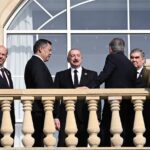
The very fact of direct communication between Aliyev and Pashinyan is no less significant. For many years, negotiations between Azerbaijan and Armenia almost automatically implied the presence of a third party — an international mediator, co-chairs, a European platform or another external format. Today, the situation is gradually changing. The leaders of the two countries are able to discuss the state of the peace process, trade and economic relations, and the implementation of transport projects directly with one another.
This change is of fundamental importance for the future regional architecture. Sustainable peace cannot be built exclusively through external mediation. Ultimately, Azerbaijan and Armenia must learn to coexist as neighboring states, discuss emerging issues directly and avoid turning every disagreement into an arena for geopolitical competition among external powers.
This is why the current peace process should not be assessed solely by whether the final document has already been signed. Much more important is the transformation in the structure of the relationship itself. Previously, the central questions concerned lines of contact, territorial control and the likelihood of another war. Today, discussions increasingly revolve around roads, trade, logistics, transit, petroleum products, investment and energy connections.
This is perhaps the most important result of the past year. Azerbaijan and Armenia are gradually moving from the logic of conflict toward the logic of interaction. Disagreements have not disappeared, not all legal issues have been resolved and there remains a need to consolidate the mutual recognition of territorial integrity definitively. Yet the environment in which these issues are now being discussed has already changed.
For Azerbaijan, the current stage is especially important because the peace process is developing after the full restoration of the country’s territorial integrity and sovereignty. Baku is no longer negotiating the status of its territories and is no longer seeking international recognition of what is already established under international law. The principal task is now different: to transform the end of the conflict into a sustainable regional order.
This is where a new political formula for the South Caucasus begins to emerge. Peace must no longer mean merely the absence of war. It must mean open routes, mutual recognition of borders, trade, economic ties, infrastructure development and the gradual formation of a common interest in stability. Only under such conditions can the end of the conflict develop into a genuinely irreversible settlement.
The first year after the Washington Summit should therefore be viewed not as the completion of the peace process, but as evidence that its new model is functioning. During this period, the sides did not return to large-scale confrontation, preserved political dialogue, began economic interaction and moved toward practical discussions of a new transport architecture.
The next stage will be significantly more difficult. The legal formalization of peace must be completed, the remaining constitutional issues must be resolved, TRIPP must be implemented, trade must expand and individual transit operations must develop into a sustainable system of regional economic interaction. Whether the current state of peace can evolve into an irreversible order will depend on precisely these developments.
Yet the principal change is already evident. Azerbaijan and Armenia are gradually ceasing to perceive one another exclusively as parties to a former conflict. Their relations are beginning to be defined by entirely different categories — transport, markets, energy, investment and connectivity.
In this sense, the peace process has entered its most important stage. A war can be ended through a political decision and a military outcome. Peace, however, has to be built. For the first time in many decades, a system is beginning to emerge in the South Caucasus in which the value of cooperation is gradually becoming greater than the political value of confrontation, while roads, trade and economic interests may ultimately do as much to preserve peace as signatures on diplomatic documents.