

The year 2025 marked an important stage in the transformation of the regional architecture of the South Caucasus and, at the same time, a point of qualitative reassessment in relations between Azerbaijan and the United States. On August 8 of last year, several key developments coincided: the initialing of the peace agreement text between Azerbaijan and Armenia, the launch of a trilateral engagement format involving the United States, the suspension of Section 907 of the Freedom Support Act, and the institutionalization of the Zangezur route project as an element of regional and transcontinental connectivity.
These processes should not be viewed in isolation, but rather as components of a single post-conflict settlement logic. The end of the Karabakh conflict following the anti-terrorist operation of September 19–20, 2023 eliminated the subject matter for international mediation in its previous form. In practical terms, the very basis for the existence of the OSCE Minsk Group disappeared, as its activities in recent years had been largely inertial. An additional factor was the Russia–Ukraine war, which made coordinated interaction among the Group’s co-chairs impossible. As a result, decisions taken at the level of the OSCE Secretariat and foreign ministers in September and December of last year effectively brought the mechanism to an end.
Against this background, Western approaches to the South Caucasus have been revised. The previous model, in which Azerbaijan was treated fragmentarily and often through the prism of lobbying frameworks, has lost relevance. The new reality is a post-conflict space with unresolved questions of long-term sustainability, transport integration, and infrastructure security. Under these conditions, the United States has shifted from a largely declarative presence to more practical engagement.
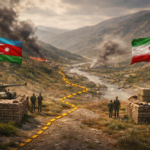
A key element of this shift was the August trilateral meeting of the leaders of Azerbaijan, the United States, and Armenia in Washington. Its practical significance lies not in symbolism, but in fixing the parameters of the subsequent process: U.S. guarantor involvement, the institutionalization of transport solutions, and the creation of a format that reduces the risks of protracted political and legal disputes. Specifically, this includes an agreed route of approximately 42 km across Armenian territory, special transit regimes, and documents providing for long-term usage rights of up to 99 years.
The initialing of the peace agreement text in the form of a declaration (memorandum of understanding) also has practical value. This format makes it possible to enshrine basic guarantees and the framework of the process without the need to resolve all legal details immediately, thereby reducing the risk of derailment at an interim stage. At the same time, expected domestic political processes in Armenia, including the parliamentary elections scheduled for June 7 and a subsequent constitutional referendum, are viewed as factors that could further stabilize the situation.
A significant signal of Washington’s changing approach was the suspension of Section 907. This step carries not only practical but also institutional significance, as it closes one of the most controversial elements in bilateral relations that emerged in the early 1990s amid limited understanding of the regional situation and the conflict itself. In effect, this represents the dismantling of a legacy constraint from a previous era that had long hindered the development of full-scale cooperation.
Following these decisions, a transition began toward a more structured dialogue. On August 8, a memorandum was signed to establish a strategic working group tasked with preparing a Charter on Strategic Partnership between Azerbaijan and the United States. The document defines the areas to be included: investment, trade, energy, transport, digitalization, artificial intelligence, and security and defense issues. The six-month timeframe allocated for drafting the Charter underscores the parties’ focus on practical outcomes rather than symbolic declarations.
The substantive nature of this course is confirmed by intensified bilateral contacts. Several official delegations, including representatives of government and the private sector, were sent to the United States. In parallel, a delegation of U.S. senators and members of Congress representing both political parties visited Baku, reflecting the institutional—rather than conjunctural—character of the ongoing shifts.
The structure of cooperation is also evolving. Whereas energy and transit previously dominated the agenda, it now increasingly includes defense industry issues, critical infrastructure security, and technological cooperation. For Azerbaijan, this is linked to the continued sensitivity of the South Caucasus to security risks and the need to build sustainable institutional ties that go beyond one-off contracts. For the United States, it offers a way to entrench a long-term role in the region through concrete mechanisms for managing connectivity and predictability.
Taken together, these elements indicate that U.S.–Azerbaijan relations are entering a phase of systemic renewal. This does not imply the disappearance of disagreements, but rather a change in the logic of interaction—from politicized assessments and crisis-driven engagement to measurable parameters, infrastructure-based solutions, and formalized agreements. In this context, 2025 can be seen as the starting point for a more predictable and pragmatic partnership model that takes into account the new regional realities of the South Caucasus.