


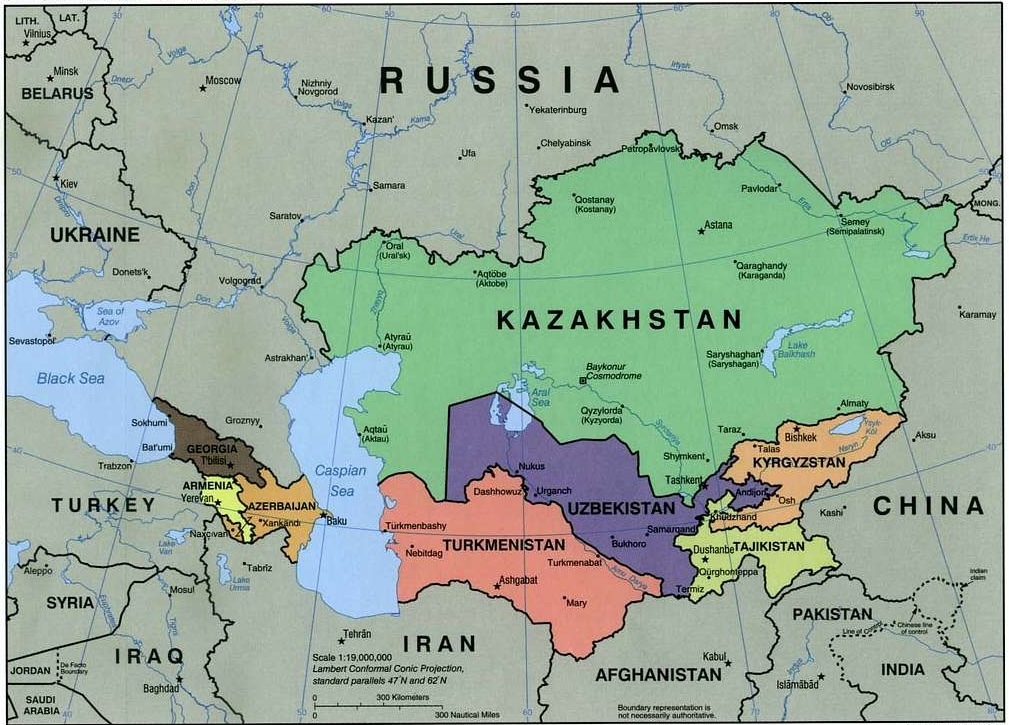
The emergence of the C6 platform with the participation of Azerbaijan and the countries of Central Asia is increasingly viewed as a reflection of a deeper transformation in Eurasia’s regional architecture. Rather than creating another formal organization, the process represents a gradual shift toward a macro-regional model of interaction in which states coordinate strategic policy directions amid an increasingly complex geopolitical environment. Despite the absence of rigid institutionalization, the format already serves as a mechanism for aligning interests and launching practical forms of cooperation.
The evolution from C5 to C6 symbolizes a change in the political logic of the region. Whereas Central Asian states previously tended to engage with major external powers primarily on a bilateral basis, a consolidated approach is now gaining traction. The C5+ practice has demonstrated that collective positioning enhances regional agency and attracts greater attention from global actors. Azerbaijan’s inclusion expands the platform’s geography, transforming it from a purely Central Asian initiative into a broader macro-regional framework stretching from the Caspian Sea to the South Caucasus.
The strategic significance of Baku’s participation lies above all in its transit potential. For landlocked Central Asian states, the Azerbaijani route represents a key gateway to Türkiye and onward to European markets. In this context, C6 is beginning to function as an informal coordinator of the transport and logistics agenda, particularly within the development of the Middle Corridor. At the same time, the format retains flexibility: decisions are taken at the level of national leaders, while implementation is carried out through intergovernmental agreements, sectoral programs, and working mechanisms without the creation of a heavy bureaucratic structure.
In an increasingly turbulent international environment, the issues of security and predictability of transit routes acquire particular importance. The investment attractiveness of logistics corridors depends directly on the harmonization of customs procedures, the alignment of cargo inspection standards, and the introduction of reliable insurance mechanisms. Economic interdependence is gradually becoming a tool for reducing conflict risks, while macro-regional coordination offers a way to minimize vulnerabilities in areas that previously experienced fragmented instability.
At the same time, the formation of C6 reflects a broader trend of shifting external influence across the region. Against the backdrop of sanctions pressure, changes in the global security environment, and the transformation of transport flows, Central Asian states have accelerated the diversification of their foreign policies, expanding engagement with new partners while strengthening intra-regional cooperation. In this context, deeper collaboration with Azerbaijan and the growing Turkic dimension are increasingly perceived as elements of a multi-vector strategy rather than as antagonistic alternatives to existing frameworks.
Importantly, the logic of C6 is not built on confrontation with third parties. The platform positions itself as open and pragmatic, focused on package-based agreements and the synchronization of interests. Even potential reactions from external actors are viewed in nuanced terms: enhanced regional cooperation may be interpreted both as a competitive factor and as a new opportunity for integration into emerging transport and economic initiatives.
The prospects for institutionalizing the format remain a subject of debate. On one hand, the expansion of the agenda—from transport and energy to security and digital infrastructure—inevitably creates a demand for more structured interagency mechanisms. On the other hand, the flexibility and lack of rigid frameworks remain key advantages, enabling C6 to adapt quickly to shifts in the global landscape. The platform’s future evolution will likely depend on practical outcomes and the ability of participating states to deliver joint projects.
In a broader sense, C6 reflects the transition of Central Asia and the South Caucasus toward a new model of regional agency. Economic complementarity, the development of transit corridors, and the desire to coordinate strategic interests are creating the foundations of a macro-regional space that is gradually emerging as an important geo-economic hub of Eurasia. This movement toward flexible, multi-layered formats of cooperation is becoming one of the defining factors reshaping the regional balance of power.