

On April 20, Azerbaijan issued a formal protest to Belgium and the Netherlands over resolutions adopted by their respective parliaments on April 16. According to Baku, the content of these documents affects issues of sovereignty and territorial integrity and has a negative impact on the ongoing peace process with Armenia. The ambassadors of both countries were summoned to the Ministry of Foreign Affairs of Azerbaijan, where they were presented with a firm position regarding the inadmissibility of actions perceived as interference in internal and regional affairs.
The resolutions adopted in the Netherlands are multidirectional but mutually reinforcing. One calls on the government to pursue, within the European Union, the release of individuals of Armenian origin convicted in Azerbaijan for serious crimes, while labeling them as “prisoners of war,” including former representatives of separatist structures. The second concerns the recognition of the so-called “Armenian genocide.” Taken together, these initiatives indicate the visible influence of pro-Armenian political and lobbying circles promoting an agenda that de facto contradicts the logic of post-conflict settlement and current trends within Armenia’s own policy aimed at normalizing relations with Azerbaijan and Türkiye.
The Belgian resolution, adopted on the same day, is broader in scope and directly addresses the parameters of the settlement. It includes provisions calling for the “unconditional withdrawal of Azerbaijani forces from occupied border territories of Armenia,” recognition of the “collective right of return” for the Armenian population of Karabakh with international security guarantees, as well as the introduction of international monitoring mechanisms and an expanded mediating role for the European Union.
From Baku’s perspective, such formulations raise several concerns. First, the use of the term “occupied territories” prior to the completion of the bilateral delimitation process reflects a one-sided interpretation of complex territorial issues. Second, the notion of a “right of return” for the Armenian population that voluntarily left the region contradicts recent statements by Armenian leadership, including Prime Minister Nikol Pashinyan, who has emphasized the need to move away from revisiting past claims as a prerequisite for achieving sustainable peace. Third, proposals for external guarantees and international monitoring are viewed as attempts to introduce mechanisms that could constrain sovereign authority within national territory and effectively replicate elements of previously discredited mediation formats.
In a broader context, these initiatives can be interpreted as a form of political pressure. They go beyond symbolic signaling and represent attempts to influence the parameters of the emerging post-conflict architecture. The involvement of parliaments from geographically distant countries, with limited direct exposure to regional dynamics, increases the risk of misinterpretation and policy prescriptions that lack practical relevance.
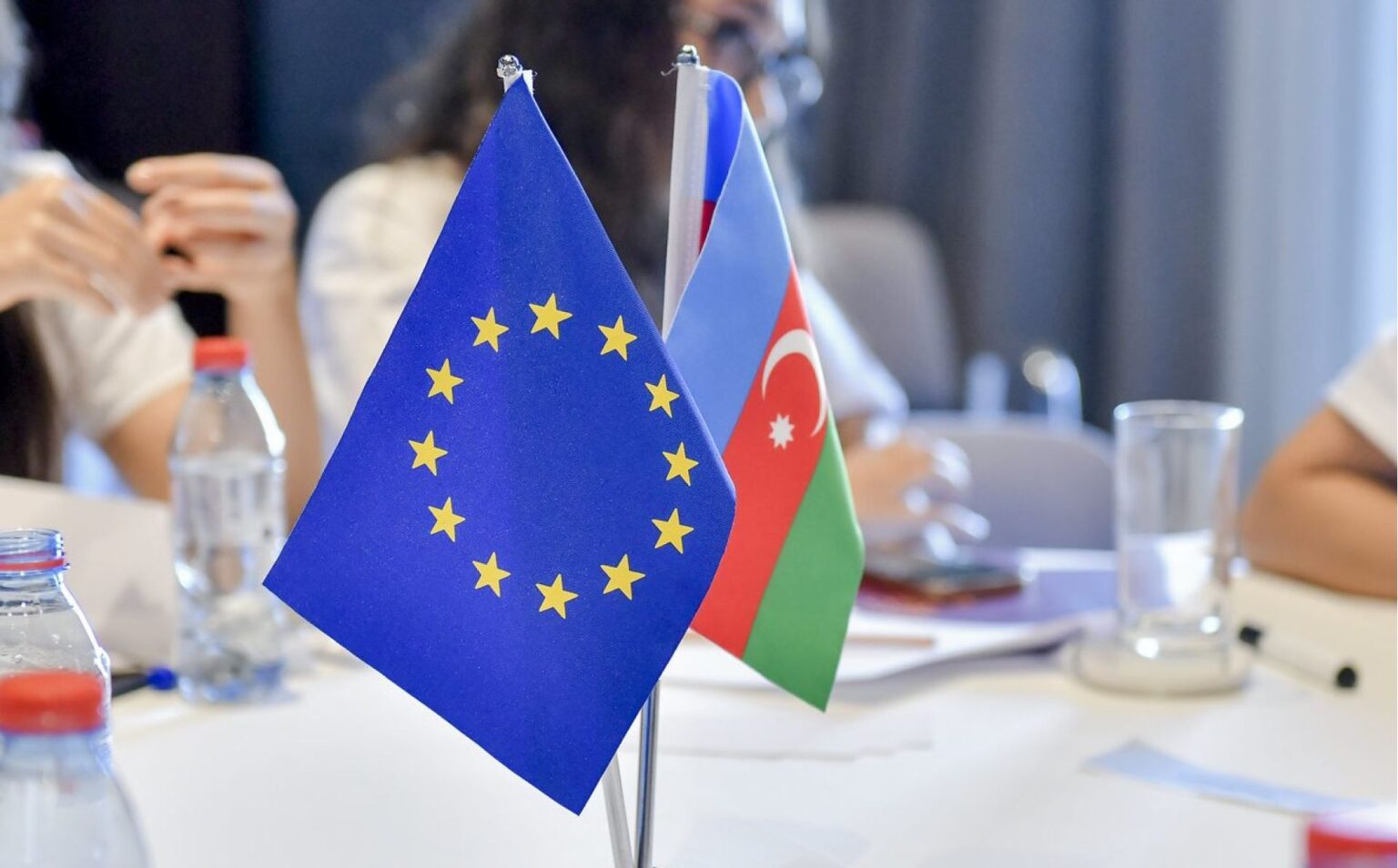
Notably, the adoption of these resolutions coincided with the launch of negotiations in Brussels between Azerbaijan and the European Union on updating their bilateral agreement and defining partnership priorities. This timing allows for the hypothesis that the parliamentary initiatives may serve as an additional layer of negotiating pressure, aimed at reshaping the framework of engagement in ways less favorable to Baku.
In this light, the situation can be seen as an attempt at coordinated external influence on the post-conflict reality of the South Caucasus, including in the interests of political groups in Armenia that are skeptical of the current model of settlement. However, such efforts face structural limitations. The regional configuration has undergone significant transformation since 2020, and the resulting balance of power is already taken into account by major external actors.
As a result, attempts to revive outdated narratives and institutional approaches are unlikely to have a meaningful impact on the trajectory of the peace process or on Azerbaijan’s negotiating position. For the European Union, a more pragmatic course would be to build long-term engagement with Azerbaijan based on recognition of the new regional realities, rather than aligning with politically driven and operationally limited initiatives.