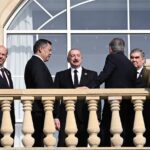


Armenian Prime Minister Nikol Pashinyan’s participation in the May 9 Victory Day parade in Moscow came as an unexpected but symbolically significant gesture. Against the backdrop of increasingly strained ties between Yerevan and Moscow, the move triggered widespread commentary among analysts, who interpreted it either as a signal of a potential recalibration in Armenia’s foreign policy or as a tactical move driven by both domestic and geopolitical instability.
The broader context adds weight to the gesture. In recent years, Armenia’s relationship with Russia has cooled markedly, while its foreign policy has consistently shifted toward diversification. This shift included active engagement with the European Union, the United States, and various international institutions. Within this framework, the Prime Minister’s visit to Moscow and his appearance at a high-profile ceremonial event can be seen as a calculated effort to keep existing diplomatic channels open with a long-standing and still influential partner.
This visit also coincided with notable changes within the Russian political establishment regarding its approach to Armenia. Earlier this year, Sergei Kiriyenko, the First Deputy Chief of Staff of the Russian Presidential Administration, was appointed to oversee the Armenian portfolio. Known for crafting flexible political and media strategies, Kiriyenko’s involvement signaled a shift in tone. Soon after his appointment, Moscow’s rhetoric toward the Armenian leadership noticeably softened—an indication of a more pragmatic strategy designed to reduce tensions.
Kiriyenko’s apparent mandate focuses on reshaping Russia’s image in Armenia’s public discourse. This includes working with media, rebuilding trust in the idea of alliance, and maintaining influence through loyal or cooperative political forces—most notably the country’s former presidents, Robert Kocharyan and Serzh Sargsyan. The Kremlin’s approach suggests it has moved away from any expectation of a near-term leadership change in Yerevan. Instead, it is opting for long-term strategic presence while coexisting with the current administration.
However, this more flexible posture has sparked frustration among pro-Russian factions within Armenia. These groups interpret Moscow’s decision to re-engage with the Pashinyan government as a betrayal—an abandonment of the idea that a “restoration” of Armenia’s pre-2018 political elite might still be achievable. From their perspective, efforts to mend ties with Pashinyan represent a retreat from pressure tactics and an acceptance of the current, Western-leaning leadership. Criticism of Pashinyan’s Moscow visit has thus been especially vocal in these circles, where his participation is cast as either hypocrisy or capitulation following the failure of a unilateral Western pivot.
At the same time, Armenia’s official narrative frames the visit as part of a broader policy of foreign policy balance. According to this view, attending the Victory Day commemorations was a symbolic gesture, not an ideological shift. Yerevan presents its foreign policy as inclusive and pragmatic, based not on confrontation but on maintaining cooperative ties with all major players, including Russia.
One notable aspect of the visit was the absence of a formal bilateral meeting between Pashinyan and Russian President Vladimir Putin. Nevertheless, indirect signals suggested that channels of communication remain open. This may point to informal understandings behind the scenes or at least to a desire to keep options for quiet diplomacy intact.
Russian media simultaneously began to circulate narratives about a “revival” in Armenian-Russian ties. Commentators emphasized that, amid a lack of tangible support from the EU, Armenia may be recalibrating its expectations and seeking to retain links with more traditional partners. Moscow, for its part, announced upcoming visits to Yerevan by both the Russian foreign minister and the speaker of the Federation Council. These visits are presented as steps toward “resetting” the bilateral relationship, especially through parliamentary diplomacy.
Despite these developments, tensions remain high. Just prior to Pashinyan’s trip, the speaker of Armenia’s parliament publicly accused Russia of waging a hybrid war against the country and of backing destabilizing political forces inside Armenia. These accusations—accompanied by attacks on former presidents seen as Moscow’s allies—highlight the depth of mistrust that continues to define the bilateral relationship. While gestures of engagement persist, the institutional foundations of trust remain weakened.
In this climate, the Armenian leadership has declared a shift toward a “balanced foreign policy,” seeking to build a framework that accommodates both Western and Russian partnerships. This strategy can be interpreted as an effort to escape a binary geopolitical trap and reduce Armenia’s exposure to pressure from either side. Yet, its success depends not only on diplomatic dexterity, but also on domestic political cohesion—without which any foreign policy strategy remains vulnerable to both internal and external disruption.
Pashinyan’s visit to Moscow, then, does not reflect a dramatic policy reversal. Rather, it represents a tactical adjustment within narrow constraints. The attempt to maintain balance between Western and Eastern alignments speaks to Armenia’s growing strategic uncertainty—and its urgent need to adapt to a rapidly shifting regional security environment.