

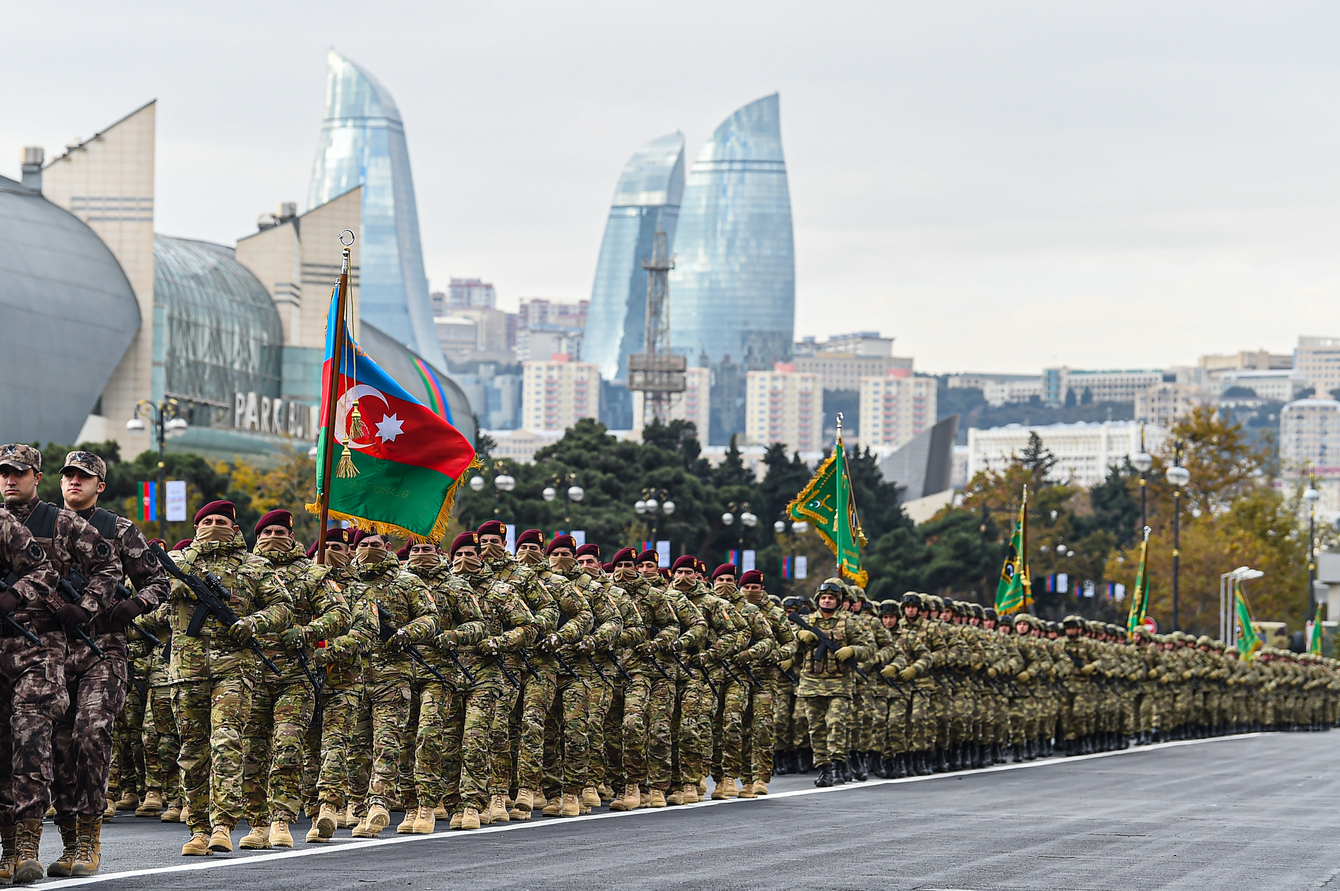
The Shusha Global Media Forum was not merely another international platform for discussing the role of the media, the restoration of trust and the struggle for truth in the post-conflict period. Its significance was broader. It was in Shusha that a new political formula of modern Azerbaijan was effectively articulated — the formula of a state that no longer limits itself to the framework of a regional periphery and increasingly sees itself as an independent center of influence.
In this context, particular attention was drawn to President Ilham Aliyev’s words that he does not object to Azerbaijan being described as a “middle power.” At first glance, this may seem like an ordinary diplomatic formulation. In reality, however, it is an important political signal. Azerbaijan is not merely acknowledging the growth of its international significance. It is offering a new understanding of its own role in a changing world order.
For Baku, the concept of a “middle power” is not a matter of political vanity, nor is it an attempt to mechanically position itself somewhere between small states and great powers. It is the result of a long historical journey: from the vulnerability of the early years of independence, war, occupation and the forced displacement of hundreds of thousands of people to the restoration of territorial integrity, the strengthening of sovereignty and the transformation of the country into one of the key actors in regional and interregional politics.
This is why Azerbaijan’s understanding of a “middle power” does not begin with numbers — not with territory, population, GDP or military budget. It begins with agency. A middle power, in Azerbaijan’s understanding, is a state capable of independently defining its national interests, defending them, shaping the regional agenda and preventing external centers of power from imposing foreign scenarios upon it.
This meaning is especially important in light of Azerbaijan’s recent history. The country did not emerge in the comfortable conditions of stable independence. Its first decades were marked by the loss of control over part of its territory, destruction, the severe consequences of war, the problem of refugees and internally displaced persons, and the need to prove what should have been obvious — the right to sovereignty and territorial integrity. Within such a historical framework, Azerbaijan’s current international activism cannot be taken for granted.
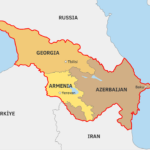
The fact that Baku today hosts global forums, initiates international projects, speaks on major platforms and participates in shaping transport, energy and political agendas is not the result of coincidence. It is the outcome of a consistent state strategy. Azerbaijan has moved from being a country fighting for the restoration of justice to a state whose position must be taken into account when discussing the future of the South Caucasus, the Caspian region, the Middle Corridor and the broader Eurasian architecture.
In this sense, the Second Karabakh War was not only a military and political turning point. It changed the very structure of regional perceptions of Azerbaijan. The South Caucasus after 2020 is no longer the same. The restoration of Azerbaijan’s territorial integrity became an event that not only closed one historical chapter but also opened a new one. A state that had for decades been viewed through the prism of conflict and occupation began to act as a force shaping a new regional reality.
This leads to the first key component of Azerbaijan’s understanding of a “middle power” — sovereignty. In this case, sovereignty means not only internationally recognized borders and legal status. It means the ability of a state to make decisions independently, conduct an independent foreign policy, defend national interests and not seek permission for its own development. For Azerbaijan, this is fundamental: independence must not be formal; it must have practical substance.
The second component is strategic autonomy. Azerbaijan does not view middle-power status as movement toward one bloc against another. On the contrary, its model is based on the ability to cooperate with different centers of power while preserving freedom of maneuver. Baku develops allied relations with Türkiye, maintains dialogue with Russia, strengthens energy and transport ties with Europe, engages with Central Asia, actively participates in Turkic and Islamic formats, and cooperates with Western institutions. At the same time, Azerbaijan does not turn its foreign policy into an attachment to someone else’s strategy.
This is precisely what distinguishes a mature middle power from a state dependent on external patronage. A middle power may have partners, allies and long-term formats of cooperation, but it must not lose the right to assess developments independently. In Azerbaijan’s logic, this means the ability to say “yes” to cooperation, but also “no” to pressure. This is not a policy of isolation, but a policy of independent choice.
The third component is practical geopolitical relevance. Azerbaijan claims middle-power status not only through political statements. Its importance is supported by concrete functions. The country is an energy partner, a transit hub, a participant in the Middle Corridor, and a connecting link between the Caspian region, Central Asia, the South Caucasus, Türkiye and Europe. Its significance is growing because, without Baku, it is becoming increasingly difficult to discuss a wide range of issues — from energy security to Eurasian transport connectivity.
A middle power is not necessarily a country that dictates rules to the entire world. But it is a state without whose participation key issues in its region cannot be sustainably resolved. Azerbaijan has gradually moved into precisely this category. It does not claim the status of a global hegemon, but it is no longer an object of other actors’ arrangements. It participates in decision-making, offers platforms, routes, formats of cooperation and its own vision of regional order.
The fourth component is informational sovereignty. The Shusha Global Media Forum is important precisely in this context. For Azerbaijan, the struggle for sovereignty is not limited to the military, diplomatic or economic dimensions. It also continues in the information space. A state that has restored its territorial integrity must also have the ability to explain its position to the world, defend its truth, resist manipulation and prevent external forces from monopolizing the narrative about it.
This is why such forums irritate those who are accustomed to seeing Azerbaijan not as an independent author of its own history, but as an object of external interpretations. The more confidently Baku speaks in its own name, the more visible the attempts become to diminish the significance of its initiatives, portray them as propaganda or divert attention from strategic meanings through secondary scandals. In this sense, the information struggle becomes a continuation of the political struggle.
The aggressive reaction to such events is not accidental. If a country strengthens its institutions, expands political dialogue, consolidates society and builds its own international communication platforms, its opponents are left with fewer instruments of influence. When the possibility of destabilizing the internal situation through familiar methods disappears, the emphasis shifts to information manipulation. Therefore, for Azerbaijan, the formation of its own information space is not a matter of image, but a matter of state resilience.
The fifth component is national dignity. In Azerbaijan’s understanding, middle-power status is closely linked to the internal condition of society. It is not only about how the country is perceived abroad, but also about how it perceives itself. The presidential formula concerning national identity, dignity and the need to live as a proud nation points to a long-term ideological task. Azerbaijan seeks to consolidate in public consciousness the idea that its current achievements were not given from outside. They were the result of political will, patience, consolidation and strategic calculation.
This also matters for future generations. A state that has lived through occupation, war, restoration and victory cannot afford to lose its historical memory. Azerbaijan’s new political self-perception is built not on forgetting the past, but on understanding it. It is precisely the memory of the period of vulnerability that makes the current stage especially valuable. In this sense, middle-power status is not only a foreign policy concept, but also an internal one: it requires a society that understands the price of sovereignty.
At the same time, Azerbaijan’s interpretation of a “middle power” is not adventurist. This is an important point. A middle power, in Baku’s understanding, is not a state that must be drawn into other people’s conflicts, prove its strength through excessive activism or assume unnecessary risks. On the contrary, this status should protect Azerbaijan from being pulled into foreign scenarios. The more clearly a state understands its own interests, the more difficult it becomes to impose an external adventure upon it.
This is why middle-power status implies not only ambition, but also caution. Azerbaijan can be active, but it is not obliged to be involved in every external game. It can participate in international initiatives, but it must not lose control over its own course. It can strengthen ties with different partners, but it is not obliged to become an instrument of someone else’s geopolitical strategy. Such a model requires discipline, restraint and a clear understanding of national priorities.
The Shusha Forum showed that Azerbaijan is searching for new formats to explain its role to the world. Some platforms are more practical in nature, others more academic, and still others media-oriented or diplomatic. But all of them serve one broader purpose: to fill middle-power status with substance. Recognition of such a status is not enough in itself. It must be explained, developed, institutionalized and turned into a stable part of foreign policy thinking.
This is the new task for Azerbaijani analysis, media and state institutions. The concept of a “middle power” must not be a slogan, but a concept. It must explain why Azerbaijan acts independently, why it is not obliged to fit into someone else’s schemes, why its role in the region has already changed and why it must be addressed as an equal participant in international processes.
Thus, in Azerbaijan’s understanding, a middle power is a state that combines sovereignty, strategic autonomy, regional influence, practical relevance, informational resilience and national dignity. It is a country strong enough to be taken into account; independent enough not to become an appendage of someone else’s policy; and pragmatic enough not to confuse ambition with adventurism.
For Azerbaijan, this status is not a decorative label. It is the political formula of a new stage of development. It reflects the transition from survival to agency, from territorial vulnerability to restored sovereignty, from being described by others to the right to speak about itself independently. In this sense, Azerbaijan’s claim to middle-power status is not only a question of its place in the international system. It is a vision of the kind of state Azerbaijan intends to be in the long term: sovereign, confident, strategically independent and impossible to ignore in regional and international politics.