

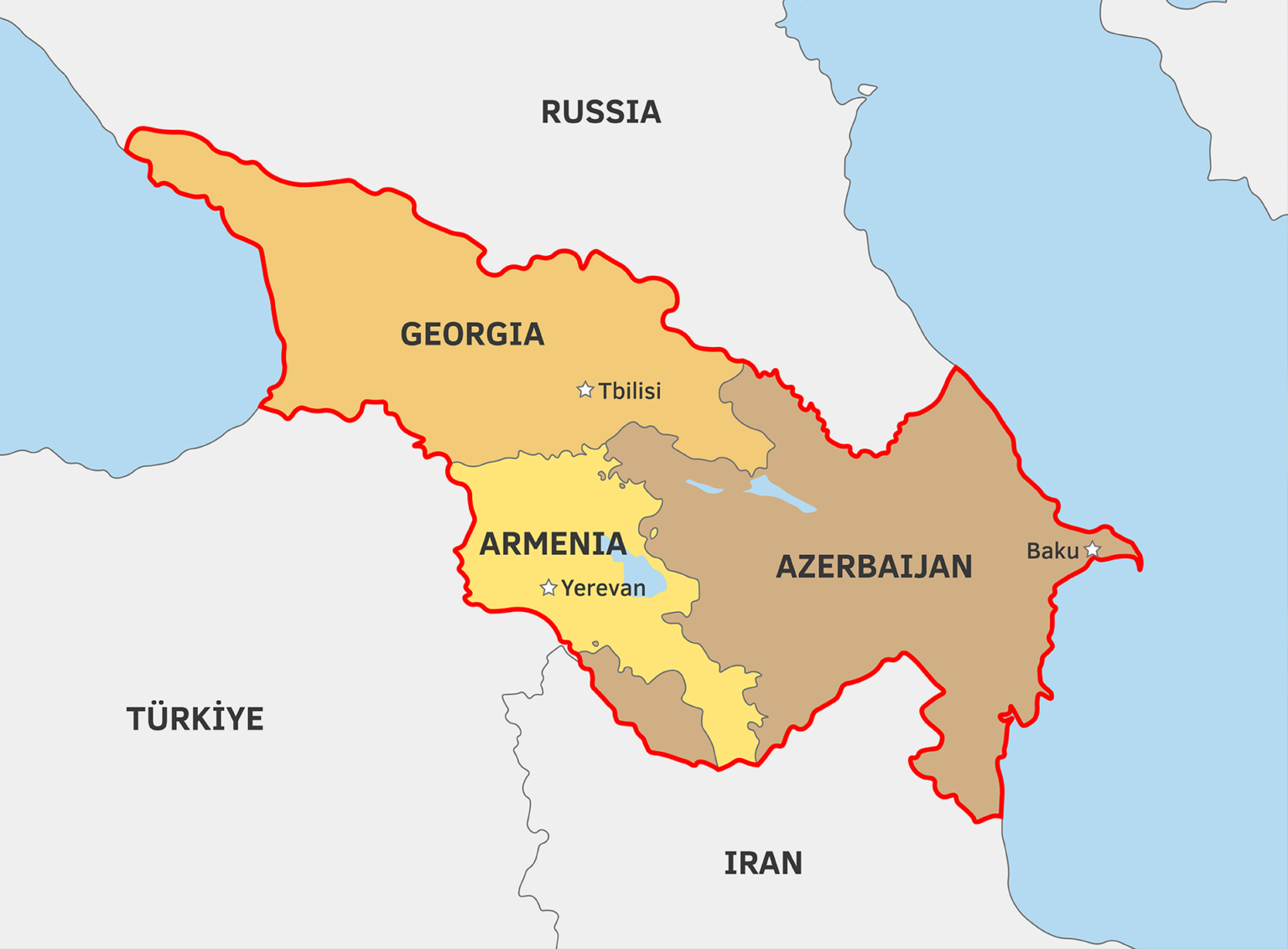
Relations between Azerbaijan and Russia have reached a stage at which their future stability depends less on diplomatic rhetoric than on Moscow’s ability to abandon its outdated assumptions about the South Caucasus. The region is no longer a space of exclusive Russian influence, while states that were once viewed in Moscow primarily as part of the post-Soviet periphery are now pursuing independent foreign policies based on their own national interests.
Azerbaijan has demonstrated this transformation with particular consistency. Baku is not seeking confrontation with Russia and has no interest in dismantling bilateral ties. On the contrary, the Azerbaijani side has repeatedly shown its readiness to preserve political dialogue, economic cooperation and pragmatic engagement. Yet this readiness does not imply a return to a model in which relations are built on hierarchy, political pressure or the assumption that Moscow possesses special rights to determine the foreign policy priorities of neighbouring states.
It is in this broader context that the latest diplomatic contacts should be assessed. President Ilham Aliyev’s statement at the Fourth Shusha Global Media Forum on 13 July that the difficult period in relations with Russia had been left behind was a deliberate political signal. Baku demonstrated its interest in reducing tensions and restoring a predictable dialogue after the serious disagreements that accumulated in 2024 and 2025.
The official visit of Azerbaijani Foreign Minister Jeyhun Bayramov to Russia, which began on 16 July, represents another manifestation of this policy. Given that the visit had reportedly been postponed for a considerable period amid unresolved bilateral issues, it cannot be regarded as a routine diplomatic event. It is a step towards dialogue taken by Azerbaijan despite the grievances that remain regarding Moscow’s conduct.
One of the most painful episodes was the AZAL aircraft tragedy and the subsequent response of the Russian authorities. For Baku, the problem concerned not only the disaster itself, but also the absence of timely, full and convincing accountability from the Russian side. The case exposed a deeper problem: Moscow too often assumes that regional states should exercise restraint even when the lives of their citizens, their sovereign rights and their national dignity are at stake.
Azerbaijan is no longer prepared to accept such an asymmetry. Its position is not based on rejecting relations with Russia, but on insisting that those relations be conducted on equal terms. Normalisation is possible, but it cannot mean suppressing unresolved grievances or returning to the previous political hierarchy.
Russia’s approach to the South Caucasus has long been based on the perception of the region as a sphere of privileged interests. Within this framework, the independent actions of neighbouring states have frequently been interpreted not as a natural expression of sovereignty, but as a challenge to Russian influence. Such a model could be maintained during the first decades after the collapse of the Soviet Union, when the political and economic capabilities of regional states were considerably more limited. Those conditions no longer exist.
Azerbaijan has strengthened its state institutions, restored its territorial integrity, expanded its international partnerships and emerged as an important participant in the energy, transport and political processes connecting Europe and Asia. Baku is developing its strategic alliance with Türkiye, deepening relations with Central Asia, the European Union, China, Middle Eastern countries, Ukraine and other partners. None of these directions should automatically be interpreted as being aimed against Russia.
Azerbaijan’s multi-vector foreign policy is neither a temporary tactic nor an attempt to balance opportunistically between major powers. It is a sustainable strategy pursued by a state with its own resources, political agency and regional ambitions. It envisages cooperation with different centres of power without granting any one of them the right to control Baku’s foreign policy decisions.
In this respect, Bayramov’s expected visit to Ukraine following his talks in Russia carries particular significance. It demonstrates that normalising relations with Moscow does not restrict Azerbaijan’s right to maintain and develop ties with Kyiv. Baku has its own established position on territorial integrity, provides humanitarian assistance to Ukraine and remains interested in expanding bilateral political and economic relations.
Any attempt to portray such contacts as an unfriendly act would confirm that part of the Russian political establishment continues to think in terms of exclusive spheres of influence. Yet dialogue with Moscow and cooperation with Kyiv are not mutually exclusive. The essence of a sovereign foreign policy lies precisely in a state’s ability to determine its partners and the substance of its relations with them independently.
For Russia, accepting this reality does not mean losing the South Caucasus. On the contrary, abandoning pressure and paternalism could create a more durable basis for preserving Russian influence and engagement in the region. Moscow still possesses considerable economic, humanitarian, transport and cultural assets. However, these resources must be used by making cooperation attractive rather than by demanding political loyalty.
Azerbaijan has no interest in allowing bilateral disagreements to evolve into a long-term confrontation. Russia remains a major neighbour, an important trading partner and a significant participant in regional affairs. Nevertheless, geographical proximity and historical ties can no longer serve as justification for an unequal model of relations.
Baku has already demonstrated its readiness to leave the most difficult period behind. Statements by the Azerbaijani leadership and the resumption of high-level diplomatic contacts indicate a desire to move towards a more constructive agenda. It now depends on Moscow whether this opportunity will be used.
To achieve this, the Russian side must stop treating Azerbaijan’s independence as a political challenge, avoid dramatising Baku’s relations with third countries and recognise that the contemporary South Caucasus consists of sovereign states rather than objects of external management.
A new model of Azerbaijani-Russian relations is possible. But it can only be built on mutual respect, accountability and recognition of the transformed regional order. Baku has taken a step towards normalisation. Moscow’s response should consist not merely of renewed diplomatic dialogue, but of a fundamental reassessment of its approach to Azerbaijan and the South Caucasus.