


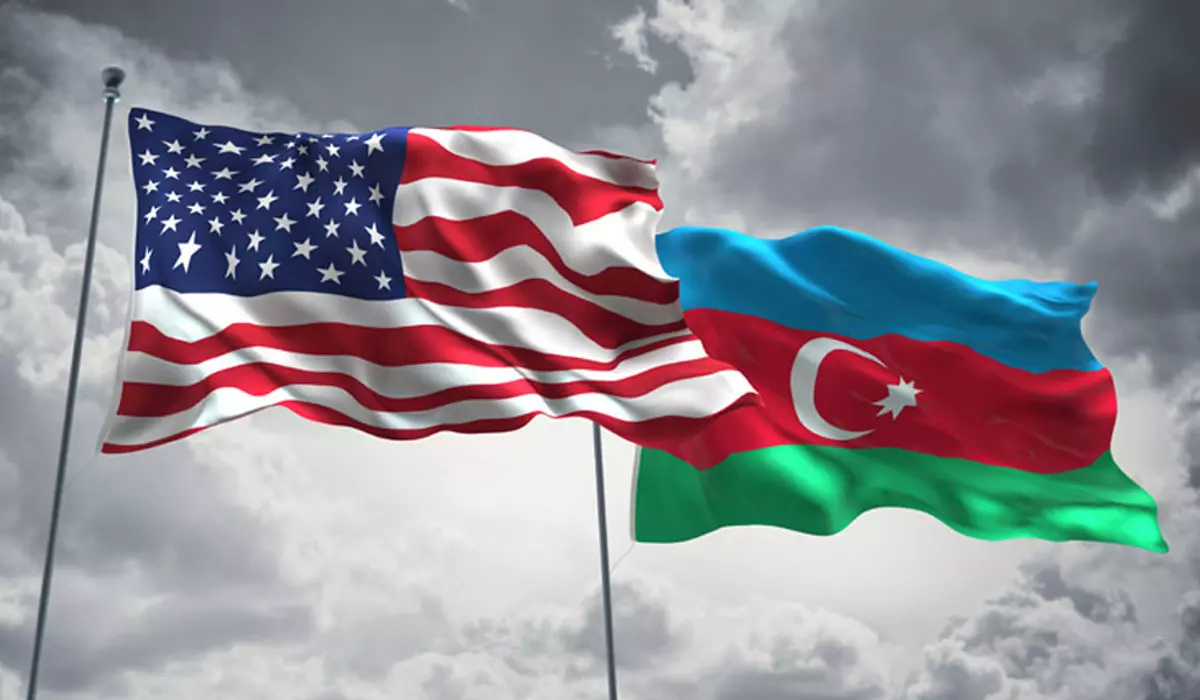
For decades, U.S.–Azerbaijan relations have evolved along a complex trajectory, marked by the tension between ideological aspirations and geopolitical realism. At various historical stages, U.S. foreign policy sought to balance the promotion of democratic values with the strategic imperative of cooperating with a vital partner in energy and regional security at the crossroads of Europe and Asia. In recent years, however, that balance has shifted increasingly toward pragmatic engagement.
A new phase in bilateral relations has emerged, characterized by a departure from moralizing rhetoric in favor of tangible strategic benefits. Issues of governance, human rights, and institutional reform have gradually receded, while energy cooperation, transport connectivity, and security collaboration now define the core of the partnership. This reorientation lends greater stability to the relationship and eliminates the contradictions that previously hindered mutual trust.
Energy and security form the two central pillars of cooperation. The Southern Gas Corridor—delivering Azerbaijani gas to Europe via Georgia and Türkiye—is more than an economic initiative; it is a strategic instrument for reducing Europe’s dependence on Russian energy supplies. Washington supports this project as part of its broader strategy to constrain the Kremlin’s geopolitical and geoeconomic reach.
In the security domain, Azerbaijan has been enhancing its military capabilities with U.S. support, including the acquisition of advanced surveillance technologies and air defense systems. This modernization directly impacts the balance of power in the Karabakh region and allows the United States to shape regional dynamics without direct military involvement.
Azerbaijan’s geographic position has elevated its role as a transport and logistics hub connecting Europe, the Caucasus, Central Asia, and South Asia. This makes Baku an integral element of U.S. Eurasian policy, especially amid growing strategic competition with China and Iran. Stable and mutually beneficial ties with Azerbaijan are therefore viewed as a component of a wider architecture of deterrence and connectivity.
Nevertheless, Washington’s involvement in the Armenian–Azerbaijani peace process remains limited. The current U.S. administration favors a policy of minimal obligations in regional conflicts, prioritizing global challenges. As a result, U.S. participation in mediation efforts remains indirect and mostly symbolic. Still, strategic interest in Azerbaijan persists, particularly in light of waning American engagement with other South Caucasus states.
The broader context also matters: U.S. foreign policy is heavily concentrated on key strategic fronts—trade with global partners, the China challenge, the Russia–Ukraine war, and tensions in the Middle East. Against this backdrop, the South Caucasus is not among the top-tier priorities, yet it remains part of Washington’s peripheral strategic calculus—especially through its ties to NATO via Türkiye, the Caspian security architecture, and the connectivity with Central and South Asia.
For its part, Azerbaijan is actively leveraging its geographical and political assets, pursuing a balanced foreign policy and strengthening ties with both global and regional actors. The country has positioned itself as a strategic node in the Turkic world, the post-Soviet space, and Eurasian transport corridors, gaining diplomatic and economic dividends in the process.
This opens the door for a structural relaunch of U.S.–Azerbaijan relations, including in non-political sectors such as education, culture, and academic exchange—areas that offer soft power benefits without the risks of political conditionality. These platforms could also serve as stabilizing mechanisms in an increasingly uncertain global environment.
In this evolving context, Azerbaijan is emerging as a key U.S. partner in Eurasia—not due to ideological alignment, but out of strategic necessity. Its importance stems not only from its internal potential but also from its external positioning—through energy, transport, security, and international relations. Amid global turbulence, such partnerships are becoming foundational elements in the new architecture of international stability and power distribution.