


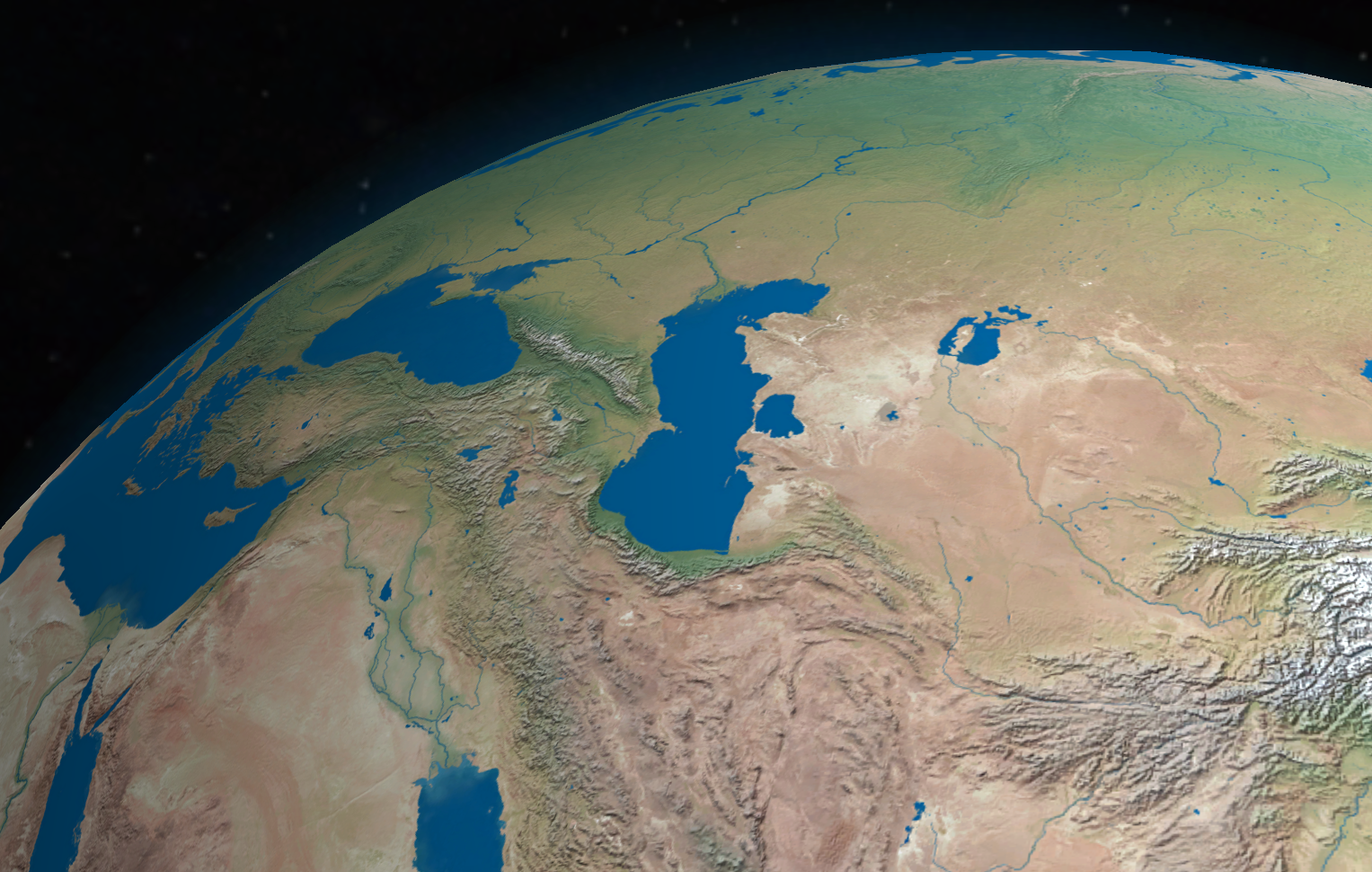
For centuries, the Caspian Sea has been one of Eurasia’s most important natural and strategic resources. It borders five states — Azerbaijan, Iran, Kazakhstan, Russia, and Turkmenistan — and has traditionally functioned as a transport hub, an energy reservoir, and a cultural frontier. Until recently, this vast body of water seemed almost invulnerable. Yet the reality of the past few decades tells a different story: the sea’s level is falling rapidly, and this process is already having a direct impact on the economies and security of the littoral states.
Between 2006 and 2024, the Caspian’s water level dropped by almost two meters. Today it stands at 29 meters below sea level — a historic low. According to scientific projections, by the end of the century the decline could reach another 18 meters, reducing the sea’s surface area by nearly one-quarter. The reason lies in the Caspian’s unique nature as a closed basin: it is fed by river inflows and precipitation rather than tides. Global warming, rising average air temperatures, shifts in wind patterns, and decreasing river inflows all contribute to increased evaporation. The balance has been disrupted, and the sea is literally retreating.
For Azerbaijan, the consequences of this process extend far beyond environmental concerns. The first area of impact is logistics and transport corridors. Falling water levels make port operations more costly, as maintaining navigable depths requires constant and expensive dredging. In 2025, for example, oil shipments through the Dubendi terminal amounted to 810,000 tons — less than the previous year despite significant investment in infrastructure maintenance.
The issue takes on particular significance in the context of the Trans-Caspian International Transport Route, better known as the Middle Corridor. Since 2022, this route has emerged as a critical alternative to transit through Russia, linking China, Central Asia, the Caucasus, and Europe. According to the World Bank, by 2030 cargo volumes along this corridor could reach 11 million tons annually, with around 4 million tons crossing the sea itself. However, if water levels continue to fall, vessels may be unable to access ports without costly upgrades, resulting in higher tariffs, delays, and reduced competitiveness.
Energy infrastructure is also at risk. Pumping systems installed along the Caspian shoreline are used to cool thermal power plants. As the shoreline recedes further, these facilities could lose their functionality, threatening energy security during peak demand periods when cooling is critical.
In this context, Azerbaijan’s decision to relocate its main maritime hub from central Baku to the settlement of Alat, 75 kilometers south of the capital, proved highly strategic. The deeper waters there currently allow stable port operations even as sea levels decline, preserving the country’s logistical resilience. Had the port remained in Baku, significant challenges would already have materialized. Yet even Alat cannot guarantee permanent depth: continued decline will likely require large-scale and costly dredging, with expenditures running into millions — if not billions — of manats.
The shrinking of the Caspian Sea is thus not only an environmental issue but an economic challenge of regional significance. It affects transit projects, energy security, and the investment climate. For Azerbaijan, the situation underscores the need for long-term strategic planning and closer coordination with other littoral states. Without such measures, the region risks a gradual erosion of its competitive advantages.