

The widening gap between the rhetoric of European institutions and the practical policies of key EU member states in the South Caucasus is becoming increasingly difficult to ignore. While the European Parliament continues to adopt critical resolutions on Azerbaijan and amplify politically charged narratives around Baku, many European governments are pursuing a markedly different course. Their approach is less declarative, less ideological, and far more pragmatic.
This contrast is no longer a matter of occasional inconsistency. It reflects a deeper divergence within Europe itself. On one side stands the institutional rhetoric of Brussels, shaped by value-based language, political signaling, and parliamentary activism. On the other side are national governments that must deal with energy security, industrial needs, economic risks, and geopolitical realities. For European societies, especially in a period of uncertainty, these practical concerns are often more immediate than symbolic declarations.
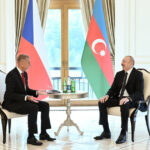
In this pragmatic framework, Azerbaijan is not treated as a marginal actor or merely as a subject of criticism. It is increasingly seen as a necessary and reliable partner. The real center of decision-making is therefore not the chamber of the European Parliament, but the bilateral track: meetings, negotiations, energy agreements, investment discussions, and strategic consultations.
No matter how often the European Parliament resorts to resolutions and critical reports, the underlying reality remains unchanged. Azerbaijan has become an important element of Europe’s energy security architecture. The Southern Gas Corridor, the expansion of gas supplies, and Baku’s role in emerging transport and logistics routes have strengthened Azerbaijan’s position as one of the key stabilizing actors in the wider region.
This is not a question of political sympathy. It is a question of economic necessity. When energy security, industrial competitiveness, and social stability are at stake, ideological language often gives way to material interests. That is why the tone of practical European diplomacy toward Baku differs so sharply from the public rhetoric produced by certain European institutions. Behind the scenes, the language is more restrained, more transactional, and far more focused on concrete outcomes.
Visits to Baku, high-level contacts, memoranda, contracts, and long-term supply arrangements represent the actual mechanics of policy. In this context, real politics is defined not by statements, but by infrastructure, supply volumes, investment commitments, and legally meaningful agreements. Azerbaijan, accordingly, is not positioned as an object of pressure, but as an actor with leverage.
Against this background, the European Parliament’s approach appears increasingly detached from the strategic calculations of European capitals. Its resolutions often fail to reflect the full complexity of the region and risk producing a simplified political narrative. Instead of contributing to balanced engagement, such documents may reinforce one-sided perceptions and reduce the space for practical diplomacy.
A separate dimension of this policy imbalance is the EU’s growing emphasis on Armenia. Brussels has increasingly framed Yerevan as a democratic partner and a regional foothold for European engagement. Yet this support is driven not only by values-based considerations, but also by political convenience. Armenia is often perceived as more dependent, more receptive to external influence, and therefore easier to integrate into Brussels’ preferred regional agenda.
Azerbaijan and Georgia, by contrast, pursue more independent foreign policies. They do not easily fit into the role of junior partners and are less willing to align themselves fully with externally designed scenarios. This autonomy is precisely what causes frustration in parts of the European political establishment. In practice, independence is not always rewarded; it can also become a reason for pressure.
The result is a clear, if uncomfortable, picture. The European Parliament may continue to harden its rhetoric, but the Europe responsible for energy, trade, infrastructure, and industrial stability has already made a different choice. That choice is shaped not by slogans, but by interests.
Value-based rhetoric will remain part of European political language. Yet when energy prices rise, supply chains come under pressure, and strategic dependencies become visible, the conversation inevitably returns to pragmatism. In that pragmatic equation, Azerbaijan is not an optional partner. It is a structural necessity.
This is the core contradiction of Europe’s policy toward Baku: public criticism continues, but practical engagement deepens. The more Europe needs secure energy routes, diversified supplies, and stable access to the Caspian region, the harder it becomes to ignore Azerbaijan’s strategic weight. Whatever language is used in resolutions, the reality is clear: without Baku, Europe’s energy and connectivity architecture becomes significantly more fragile.