

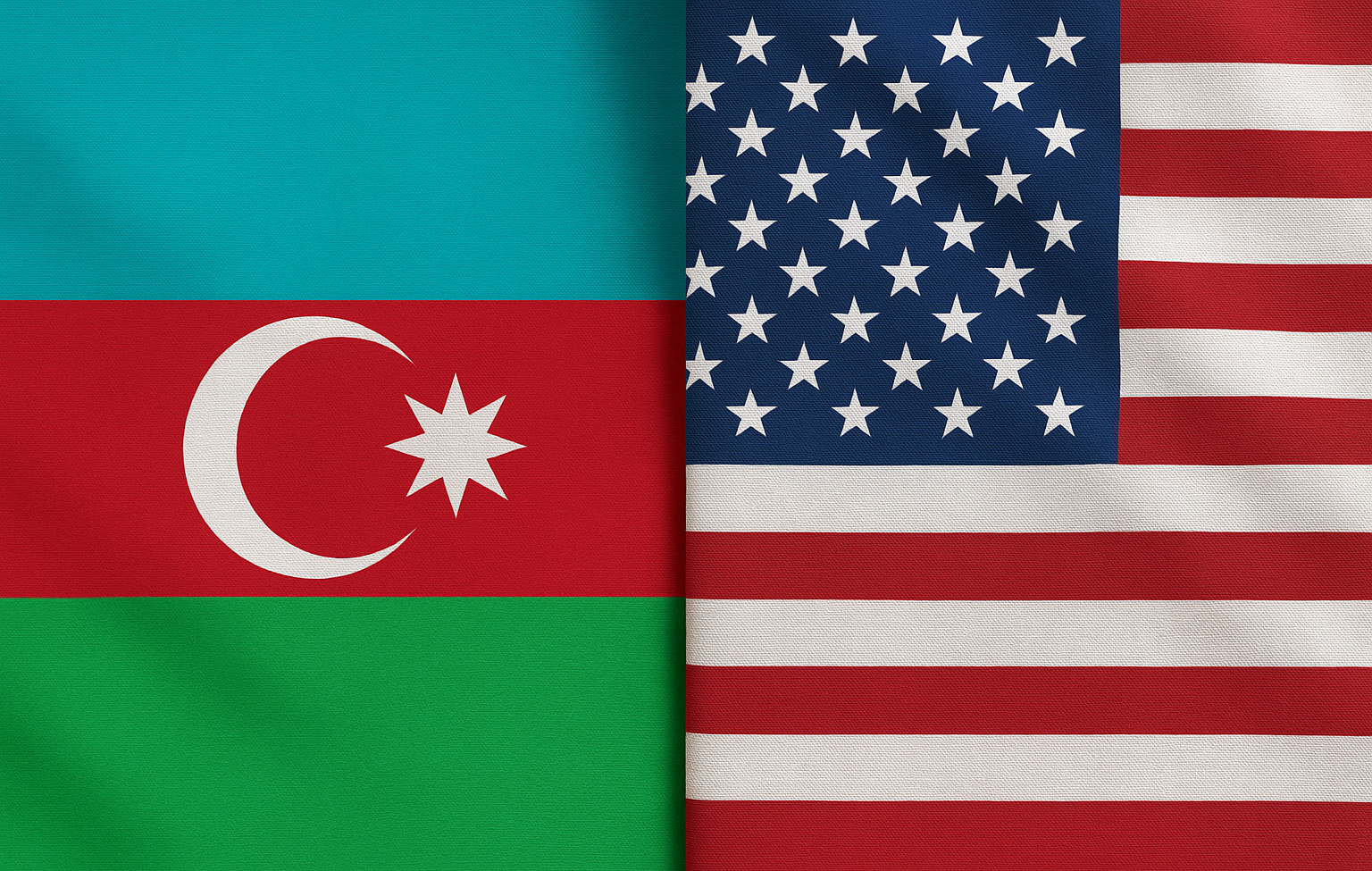
In recent days, diplomatic engagement between Azerbaijan and the United States has visibly intensified. Senior U.S. State Department officials — Deputy Assistant Secretary Joshua Huck and Senior Advisor for European Affairs Wyatt Toehlke — visited Baku for a series of high-level meetings. According to official statements, the visit aimed to continue the dialogue on economic development and regional security. Yet, the scope and density of these contacts, along with the broader political backdrop, suggest a deeper shift in Washington’s approach to Baku.
The timing of the visit coincided with the 30th anniversary of Baku Energy Week, the region’s largest energy forum. While American officials avoided explicitly linking their visit to the event, the energy context is impossible to ignore. The Southern Gas Corridor — connecting Caspian resources to Southern Europe — remains a pillar of the region’s energy architecture and a key route for the EU’s diversification strategy. For Washington, this corridor is strategically valuable, particularly amid growing competition with Russia and Iran over energy markets and influence.
Just days before the State Department delegation arrived, U.S. Senator Steve Daines, a member of the Senate Foreign Relations Committee, met with Azerbaijani President Ilham Aliyev. Senator Daines expressed interest in deepening cooperation in security and energy and also highlighted the historical partnership between the two countries, particularly in Afghanistan. He recalled the role Azerbaijani peacekeepers played in securing Kabul airport during the final phase of the U.S. withdrawal. These gestures, along with congratulatory messages from Washington marking Azerbaijan’s Independence Day, point to a deliberate attempt to reset bilateral ties following a period of relative stagnation.
Amid the ongoing war in Ukraine, intensifying rivalry with Russia, and U.S. efforts to contain Iran and China, the geopolitical map is being redrawn — and the U.S. is rethinking its Eurasian strategy. Azerbaijan occupies a unique position in this landscape: a secular Muslim state with a stable governance model, active in the Non-Aligned Movement, and a strategic ally of Türkiye. Baku also serves as a vital transit node in East–West and North–South corridors, and may play a future role in the U.S.-backed India–Middle East–Europe Economic Corridor (IMEC), proposed at the G20.
Washington’s past efforts to shape the region primarily through ideological platforms have shown their limitations. Initiatives like USAID’s support for opposition-linked civil society groups sparked tensions and were seen by many in Azerbaijan as foreign interference. But recent months have seen a shift toward a more pragmatic tone. Both sides now seem focused on tangible, mutually beneficial projects — in transportation, energy, innovation, and security.
At the same time, Azerbaijan is steadily expanding its regional influence. Strengthening ties with Turkic states, enhancing military capabilities, taking the lead in peace negotiations with Armenia, and rebuilding infrastructure in the territories liberated after the 2020 war — all of this is reshaping Baku’s image as a confident, strategic player. This evolution is increasingly reflected in U.S. rhetoric, where Azerbaijan is acknowledged as an independent power center in the region.
The signs of diplomatic reconfiguration are hard to miss. Washington appears eager not only to make up for lost time, but to build a more sustainable platform for cooperation under today’s global conditions. A return to the dynamics of the 1990s is neither possible nor desirable. Instead, the goal is a new model of balanced partnership — one that moves beyond ideology and outdated assumptions. With both sides expressing a clear interest in deeper engagement, it is likely that ad hoc contact will give way to a more structured, strategic relationship capable of shaping the future trajectory of the region.