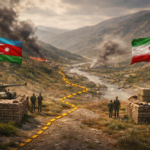



In international politics, values rarely exist in their pure form. More often, they are tools of pressure, instruments of political manipulation, and means of legitimizing the interests of powerful states. For decades, Azerbaijan has observed how the concepts of “democracy” and “human rights” are selectively applied— not to protect the oppressed, but to elevate those who claim moral superiority. Today, as Azerbaijan becomes an increasingly important geopolitical actor and a strategic energy partner to Europe, these double standards are more visible than ever.

Criticism from Western media outlets like the BBC is nothing new. But it becomes especially predictable every time Azerbaijan strengthens its position. It manifests in yet another wave of reports on “human rights,” which serve as a pretext for pressure, but are rarely driven by genuine concern for real people. These materials almost never address the past: thirty years of forced displacement, occupation, destruction, and ethnic cleansing. When Azerbaijanis were refugees, their rights were of no interest to anyone -their suffering didn’t make it into news cycles or think tank reports. But the moment the country restores its territorial integrity and becomes a key energy hub for Europe, suddenly the “standards” reappear.
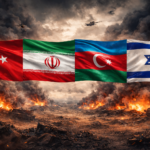
We are witnessing a global reordering of the world. Resources are being redistributed, borders are shifting, old state structures are collapsing, new alliances are emerging. This is not a formal, but a de facto Third World War. Not a classic war with tanks, but a hybrid one — fought through information, economics, and psychological warfare. And in this war, nations striving to preserve their dignity, sovereignty, and the right to shape their own future simply do not have the luxury of listening to lectures on imported standards of democracy.
Azerbaijan has lived through decades of occupation. Hundreds of thousands of our citizens were stripped of everything- their homes, land, and future. These people were never in the spotlight of Western media. Their pain never became a fashionable cause for human rights NGOs. Where were these “concerned” organizations for the past thirty years? Why did no one speak up about the rights of Azerbaijani refugees and internally displaced persons who lived in train cars, basements, and crumbling dormitories?
Now that Azerbaijan has restored its territorial integrity and is growing stronger, we are once again summoned to moral interrogations. We are asked: Why don’t you have the same democracy as Brussels? Why aren’t your NGOs like the ones in Oslo? Why is your army stronger than your neighbors’?
The answer is simple: because we do not live in a textbook on human rights. We live in the real world. And in this world, survival requires defending what is ours. Millions of Azerbaijanis are willing to sacrifice comfort — and if necessary, their lives — for that. What we are not willing to tolerate is moral lectures from those who remained silent or openly supported the aggressor when it mattered most.
Azerbaijan no longer passively accepts selective moralism. We’ve learned to respond. I recall one of the clearest and most deliberate examples — a roundtable held in Baku in 2015 on the Malvinas (Falkland) Islands. This was not just an academic discussion — it was a diplomatic signal. Azerbaijan knows where the United Kingdom is vulnerable and is willing to speak on sensitive topics where it hurts. It wasn’t about taking sides in a foreign territorial dispute, but about applying the principle of reciprocity: if you use the Karabakh issue as a lever against us, we, too, can remind you of the Falklands.
The same logic applies to New Caledonia and other overseas territories where indigenous peoples are marginalized. France was among the most openly partisan supporters of Armenia in the Karabakh conflict — ignoring international law and intervening directly in regional politics. Azerbaijan’s growing attention to the legacy of French colonialism in the Pacific is no coincidence — it is a mirror. If Paris supports separatism abroad, Baku is left with no choice but to remind France of how painfully separatism could strike back at itself.
That is why countries must behave with balance — as Spain did, for instance. Unlike France and the UK, Spain maintained a relatively reserved stance throughout the Karabakh conflict. It did not interfere in the affairs of the South Caucasus, did not provocatively side with Armenia, and did not take part in resolutions that disrupted the balance. And Azerbaijan, in turn, never exploited the issue of Catalonia.
Once again, the logic is clear: respect for respect, neutrality for neutrality. Azerbaijan does not seek confrontation. It seeks equality. When treated as a partner, it acts like a partner. But when pressured, it responds. There is no threat or aggression in this. It is the maturity of a nation that has gone through suffering, war, and reconstruction.
If the so-called collective West truly seeks strategic and respectful dialogue, it must stop viewing Azerbaijan as a subject of patronage or moral instruction — and start engaging with it as an equal sovereign actor. Because attempts to use values as leverage in an age of geopolitical upheaval are doomed to fail.
Azerbaijan is one of the few countries that has proven this, and will continue to prove it.