

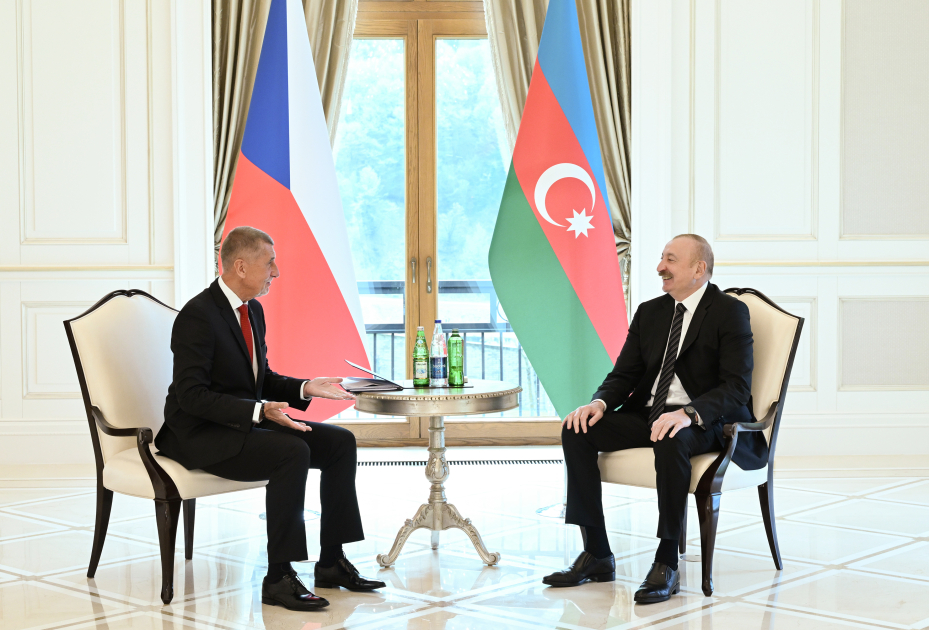
The official visit of Czech Prime Minister Andrej Babiš to Azerbaijan should be understood not as a routine diplomatic engagement, but as an indicator of a structural shift in bilateral relations. Its significance stems primarily from the prolonged pause in high-level contacts: over the past decade, political dialogue has been sporadic and largely confined to the margins of multilateral platforms. In this context, the visit effectively signals an attempt to re-institutionalize engagement and restore strategic depth to the relationship.
The resumption of political momentum coincides with broader transformations in Europe’s economic and energy architecture. The European Union’s growing interest in Azerbaijan is driven not only by the need to diversify energy supplies, but also by the reconfiguration of transport and logistics corridors, in which the South Caucasus is acquiring renewed relevance. Against this backdrop, Baku is gradually moving beyond its role as a commodity exporter, seeking to position itself as a multi-dimensional partner spanning energy, industry, and infrastructure.
The structure of bilateral trade has historically produced an asymmetric yet functionally complementary model. Azerbaijan supplies energy resources—primarily oil—while Czech exports are diversified and concentrated in higher value-added sectors, including machinery, pharmaceuticals, and industrial goods. This configuration provides a degree of stability, but also exposes the relationship to fluctuations in global commodity markets and limits the depth of economic integration.
Recent trade dynamics reflect this duality. The recovery of trade turnover following the 2020 downturn, reaching over $1.15 billion in 2024, underscores the importance of the Czech direction. However, the persistent imbalance—more than $1 billion in Azerbaijani exports compared to approximately $60–70 million in imports—highlights the limited diversification of trade. At the same time, Azerbaijan’s emergence as the largest supplier of oil to the Czech Republic in 2025, accounting for over 40% of imports, reflects not only economic ties but also Prague’s broader geopolitical reorientation away from Russian energy supplies.
Within this context, Babiš’s visit takes on a distinctly practical dimension. For the Czech Republic, the priority lies in securing stable and long-term energy supply channels. For Azerbaijan, the objective is to expand its presence in European markets beyond crude oil, including potential gas exports and participation in evolving energy value chains.
A notable development is the intensification of defense-industrial cooperation, signaling a qualitative deepening of ties. The planned joint venture with Czechoslovak Group to service and modernize armored vehicles illustrates a shift from procurement-based relations toward elements of technological localization. Central to this initiative is the transfer of expertise and the development of lifecycle maintenance infrastructure—both aligned with Azerbaijan’s long-term goal of strengthening its domestic defense industry.
More broadly, this reflects a convergence of industrial strategies. The Czech Republic is expanding its role in the niche of military modernization and increasing defense exports, while Azerbaijan is working to reduce import dependence and build indigenous production capabilities. This emerging cooperation enables Prague to consolidate its position in external markets, while allowing Baku to accelerate industrial development in the defense sector.
The economic dimension of the visit was further reinforced by the Azerbaijan–Czech business forum held in Gabala, which served as a platform for translating political agreements into practical engagement. Notably, the Czech side expressed, at a high level, interest in long-term contracts for Azerbaijani gas supplies. This may indicate a shift from episodic cooperation toward more systematic integration into Europe’s evolving gas architecture.
At the same time, both sides outlined opportunities for cooperation in industry, transport, and infrastructure, including reconstruction efforts in the Karabakh and East Zangezur regions. At this stage, Czech business interest remains largely niche-oriented, focusing on areas such as decentralized energy solutions, municipal infrastructure, and engineering services. These include local power generation technologies and infrastructure systems aimed at supporting post-conflict recovery and basic service provision.
Taken together, the outcomes of the visit suggest a transition toward a more comprehensive model of Azerbaijan–Czech relations. The partnership is no longer confined to trade alone, but is increasingly incorporating investment, technological cooperation, and long-term industrial projects. This shift enhances the resilience of bilateral ties and expands the capacity of both countries to position themselves more effectively within a changing regional and global economic landscape.