

In September 2023, Azerbaijan completed the restoration of its sovereignty over the Karabakh region. From the standpoint of international law, however, the region’s status had never been in doubt: Karabakh was internationally recognized as part of Azerbaijan, including within the United Nations framework. This position was reflected in the 1993 UN Security Council resolutions on the conflict, which reaffirmed Azerbaijan’s sovereignty and territorial integrity and called for the withdrawal of occupying forces from Azerbaijani territories. For decades, this remained the legal and diplomatic basis of the international approach to the issue.
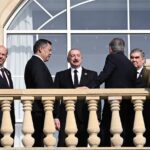
In October 2022, during the Prague meeting, Armenian Prime Minister Nikol Pashinyan and Azerbaijani President Ilham Aliyev reaffirmed their commitment to the UN Charter and the 1991 Alma-Ata Declaration, thereby recognizing each other’s territorial integrity and sovereignty. This position was later specified in the Brussels process, when Armenia recognized Azerbaijan’s territorial integrity within 86,600 square kilometers — a figure that also includes Karabakh.
It would therefore seem that, after this, the Karabakh issue should have moved from the category of political conflict into the sphere of post-conflict settlement, humanitarian matters, confidence-building and preparation for a peace treaty between Azerbaijan and Armenia. Yet some external actors continue to treat Karabakh not as an internal region of sovereign Azerbaijan, but as a separate international issue requiring special formats, platforms and mechanisms.
This is where the key question arises: do such initiatives actually help peace — or do they, on the contrary, preserve the conflict logic of the past?
Switzerland has become one of the visible centers of this activity. For a country traditionally associated with neutrality, mediation and cautious diplomacy, this is a particularly sensitive matter. Swiss political culture is built on balance, trust and respect for international law. Therefore, any initiatives coming from Bern are inevitably perceived not merely as the private position of individual parliamentarians or organizations, but as a signal carrying broader political weight.
In recent years, Swiss National Council member Erich Vontobel has played a visible role in promoting the Karabakh agenda in Switzerland. His activity in relation to the South Caucasus raises questions not because he deals with humanitarian issues. The protection of people’s rights, security concerns and the dignity of civilian populations is, in itself, an entirely legitimate task. The problem lies elsewhere — in the evident one-sidedness of the approach.
After Azerbaijan restored control over Karabakh, Vontobel did not focus on supporting direct peace between Baku and Yerevan, nor did he place recognition of the new realities and the need to close the conflict chapter at the center of his efforts. Instead, he became one of the initiators of a platform devoted to the return of the Armenian population to Karabakh.
At first glance, the issue of population return appears humanitarian. However, a humanitarian approach cannot be selective. If the right of return is being discussed, it is impossible to ignore the hundreds of thousands of Azerbaijanis who were expelled from Karabakh and the surrounding districts during the period of Armenian occupation. Their fate, the destroyed cities, ruined villages, mined territories and decades spent as internally displaced persons are also part of the humanitarian picture of the conflict.
Christian Solidarity International also plays a special role in shaping this agenda. CSI was founded in Switzerland in 1977 and presents itself as an international human rights organization defending persecuted Christians and religious minorities. The organization has consultative status with the UN and is headquartered in Zurich.
CSI once did indeed focus on issues of religious persecution in different parts of the world. In recent years, however, a significant part of its public activity has become connected with Karabakh. An analysis of the organization’s publications reveals a consistent pattern: the conflict is described almost exclusively through an Armenian lens. Politically loaded terms such as “Artsakh”, “blockade of Artsakh”, “ethnic cleansing of Armenians in Karabakh” and similar expressions are used regularly — in effect reproducing the vocabulary of one side of the conflict.
For a human rights organization, such terminological precision is of fundamental importance. Language in matters of this kind is not a neutral detail. It shapes the frame through which events are perceived. When an international NGO uses the political vocabulary of an unrecognized separatist entity, it inevitably calls its impartiality into question.
The most visible result of this line was the Swiss initiative of 2024 to create an international platform for dialogue between Azerbaijan and the Karabakh Armenians. Later, representatives of the Armenian diaspora, former figures of the dissolved separatist regime, individual Swiss politicians and non-governmental organizations became active around this initiative.
Formally, such an initiative can be presented as humanitarian. But in the political context, it looks far more complex. Today, Baku and Yerevan are closer to a peace treaty than at any point in the past three decades. Azerbaijan and Armenia are discussing normalization not through the prism of the old conflict, but on the basis of mutual recognition of territorial integrity. Under these circumstances, artificially bringing the Karabakh issue back into the international agenda objectively works not toward ending the conflict, but toward preserving its political residue.
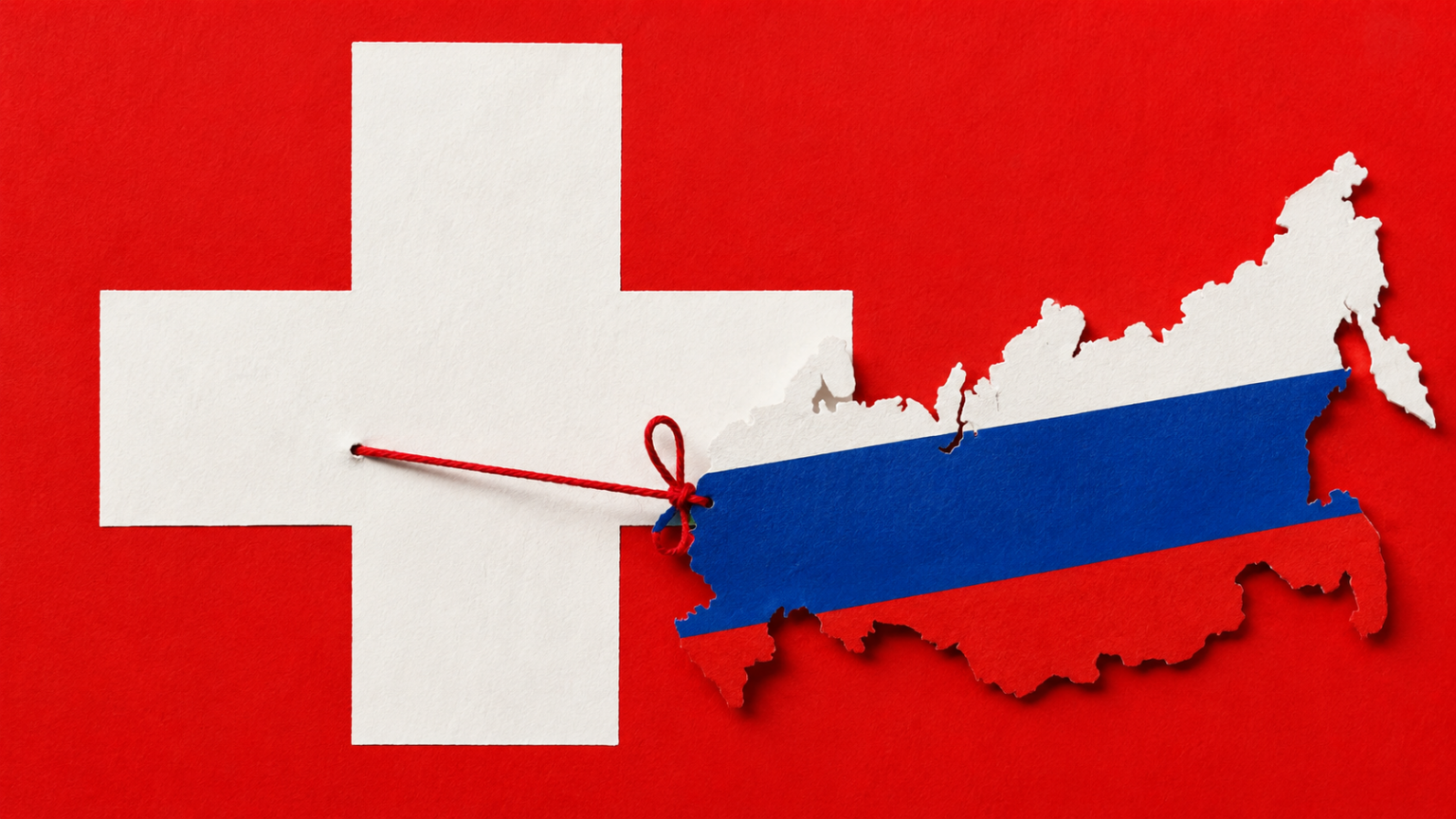
This is where a parallel with the Russian approach emerges. Moscow is also interested in ensuring that the peace process between Azerbaijan and Armenia does not become fully independent and irreversible. For Russia, preserving an “unfinished issue” in the South Caucasus has traditionally been a tool of influence. As long as the conflict is not closed, space remains for mediation, pressure, military presence, information operations and political maneuvering.
Of course, it would be wrong to equate Russian policy with Swiss initiatives. Their nature, motives and institutional environments are different. But in analysis, it is not only intentions that matter, but also consequences. And in this case, the consequences partially overlap: both Russian and certain Western narratives sustain the idea that the Karabakh issue is supposedly not over.
This is reflected in several recurring arguments. The first is the idea that Karabakh requires a special international mechanism. The second is the claim that the region supposedly needs a separate political status or a special discussion format. The third is the focus exclusively on the Armenian population, while Azerbaijani internally displaced persons are almost entirely ignored. The fourth is the preservation of terminology associated with the former separatist entity.
This framework effectively keeps the South Caucasus trapped in the logic of the past. It does not help Armenians and Azerbaijanis move toward normal coexistence. On the contrary, it provides political fuel to forces that do not want to recognize the end of the territorial conflict.
This becomes especially problematic when such a line comes from Switzerland. A country that has spent decades building a reputation as a neutral mediator must be particularly careful to ensure that its humanitarian language does not become an instrument of political revisionism. Neutrality is not equal distance between international law and separatism. Neutrality does not mean a willingness to replace the recognized territorial integrity of a state with emotionally convenient but legally questionable constructions.
If Switzerland truly wants to contribute to peace in the South Caucasus, its approach must be balanced. This means recognizing Azerbaijan’s territorial integrity not only in formal statements, but also in practical policy. It also means paying attention to all affected groups, including Azerbaijani internally displaced persons. Finally, it requires avoiding formats that create the impression of international legitimization for an already dismantled separatist agenda. One cannot support peace while keeping the door open for political illusions that have already once led the region to war.
Today, the South Caucasus does not need new external platforms around Karabakh. It needs support for the direct Azerbaijan-Armenia peace process. The less external actors try to revive old conflict frameworks, the greater the region’s chances of moving into a new political reality.
This is precisely why the Swiss initiative around Karabakh requires critical assessment. Peace in the South Caucasus is possible only on the basis of recognized borders, respect for sovereignty and rejection of revanchist expectations. Anything that delays this moment — whether it comes from Moscow, Bern or any other capital — does not work for reconciliation, but prolongs the conflict by other means.