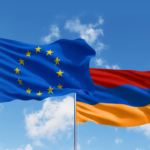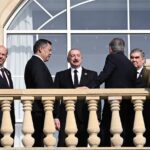



The trilateral meeting in Washington between President Ilham Aliyev of Azerbaijan, Prime Minister Nikol Pashinyan of Armenia, and US President Donald Trump has become a pivotal moment in the post-war evolution of the South Caucasus. While formally framed as a step toward peace and economic cooperation, the summit’s outcomes indicate a deeper recalibration of the region’s geopolitical architecture.
At the heart of the agreements lies the commitment to establish an unhindered transport link between mainland Azerbaijan and its Nakhchivan exclave. Known in Baku as the Zangazur Corridor—and provisionally branded in Washington as the “Trump Route”—this project transcends mere logistics. It redefines the strategic geography of the South Caucasus by opening east–west transit lines that bypass traditional choke points and dilute legacy dependencies.
For Azerbaijan, the corridor consolidates post-war territorial gains while expanding economic, cultural, and security ties with regional and extra-regional partners. For Armenia, it offers both an opportunity and a strategic dilemma: the potential to diversify foreign policy and improve connectivity, set against the necessity to recalibrate long-standing alliances. In either case, the corridor becomes a lever of transformation rather than a narrow infrastructure initiative.
Equally significant is the US decision to waive Section 907 of the Freedom Support Act, a legislative constraint that for three decades limited Washington’s security and economic engagement with Baku. Its removal is more than a technical adjustment; it is a signal that the United States intends to deepen its role in regional security architecture and leverage Azerbaijan’s position as a reliable partner in a volatile neighborhood.
For Azerbaijan, this opens channels to advanced defense cooperation, investment, and technology transfer, reinforcing its resilience against external pressures. Regionally, it reflects a shift toward multi-vector alliances, where Washington is prepared to serve not just as a mediator but as a guarantor of stability.
The Washington talks also advanced the de facto dismantling of the OSCE Minsk Group, long criticized for entrenching the Karabakh status quo. By aligning the peace process with direct bilateral and trilateral channels—and conditioning progress on constitutional reforms in Armenia—Baku has effectively redefined the negotiation framework. This is not only a procedural shift; it is the removal of an obsolete mediation model in favor of more agile, result-driven mechanisms.
The summit’s implications extend well beyond infrastructure and bilateral cooperation. They mark a redistribution of influence in a region historically under Moscow’s security umbrella. Russia’s ability to reassert itself is already constrained by strained bilateral relations with Azerbaijan—exacerbated by incidents such as the downing of an AZAL aircraft in Russian airspace and reported pressure on the Azerbaijani diaspora.
With Washington stepping into a more assertive mediating role, Moscow faces the dual challenge of responding to diminishing leverage and redefining its presence in a rapidly evolving diplomatic environment. Whether it can adapt remains uncertain, especially given its preference for legacy structures and resistance to acknowledging altered realities.
Conclusion
The outcomes of the Washington summit—launching the Zangazur Corridor, waiving Section 907, sidelining the Minsk Group, and embedding the US more firmly into the peace architecture—collectively represent a systemic shift in South Caucasus geopolitics.
President Aliyev’s strategic diplomacy has been central to this transformation, converting tactical openings into durable gains for Azerbaijan’s sovereignty, connectivity, and global standing. The emerging order is characterized less by zero-sum territorial competition and more by the capacity to forge resilient, mutually beneficial partnerships.
In this evolving environment, actors unable or unwilling to adapt risk marginalization. For those that do, the South Caucasus may yet transition from a post-conflict fault line into a hub of interconnected stability.