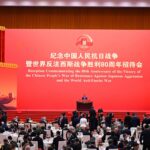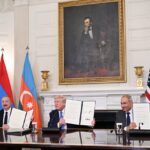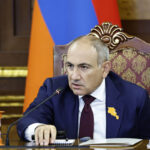


The 13th CICA Think Tanks Forum held in Baku once again demonstrated the growing role of the expert community in world politics. Where diplomatic practice often limits itself to reacting to immediate challenges, analytical institutions and research centers are able to focus on strategic issues. This was precisely the point emphasized by Azerbaijani President Ilham Aliyev in his address to the participants, drawing attention to a topic that is becoming increasingly central to the global debate—the need to reform the United Nations Security Council.
The current structure of the Security Council is a product of the mid-20th century. It was shaped in the postwar context, where the five victorious powers entrenched for themselves the exclusive right of veto, thereby obtaining the ability to block any decision of the international community. For a long time, this architecture was seen as a guarantee of stability, yet over time it has turned into a source of systemic dysfunction. The examples are well known: four resolutions on the Karabakh conflict remained only on paper for nearly three decades until Azerbaijan implemented them on its own during the 44-day war. Similarly, the war in Ukraine revealed the inability of the UN and its Secretary-General to act as an authoritative mediator.
The problem is not situational but structural. The world has changed beyond recognition compared to 1945. At the time of the UN’s founding, it had only 51 member states; today, there are 193. Decolonization, the rise of independent countries in Asia and Africa, and the emergence of new centers of economic and political power have all profoundly transformed the international community. Yet the institutional architecture of the Security Council has remained unchanged. The five permanent members continue to represent the interests of a narrow circle of states, while the voices of the majority—the countries of the Global South—are effectively marginalized.
This creates an obvious imbalance: an international organization designed to be universal operates under rules reflecting realities from nearly a century ago. Such archaism leads to a legitimacy crisis. Each year it becomes harder to justify why the views of five states should be taken as the will of the entire international community. Moreover, international relations themselves are acquiring a new dynamic. The leading economies of Asia, Latin America, and Africa are increasingly shaping their own regional and global agendas, demanding fair representation. This is what many analysts call the “awakening of the Global South.”
In this context, the words of the President of Azerbaijan resonate as part of a broader international discussion about the future of global governance. It is clear that expanding the composition of the Security Council’s permanent membership to include representatives of the developing world is not only a matter of political fairness but also of institutional survival for the UN. If the Organization fails to adapt to the new reality, its role in the international system will inevitably diminish, giving way to alternative formats and regional alliances.
The 13th Baku Forum showed that the expert community is increasingly raising questions on which the architecture of global security depends. Security Council reform is no longer an academic issue but a practical necessity. The world needs institutions capable of reflecting the interests of the majority, rather than reproducing the outdated balance of the mid-20th century.