


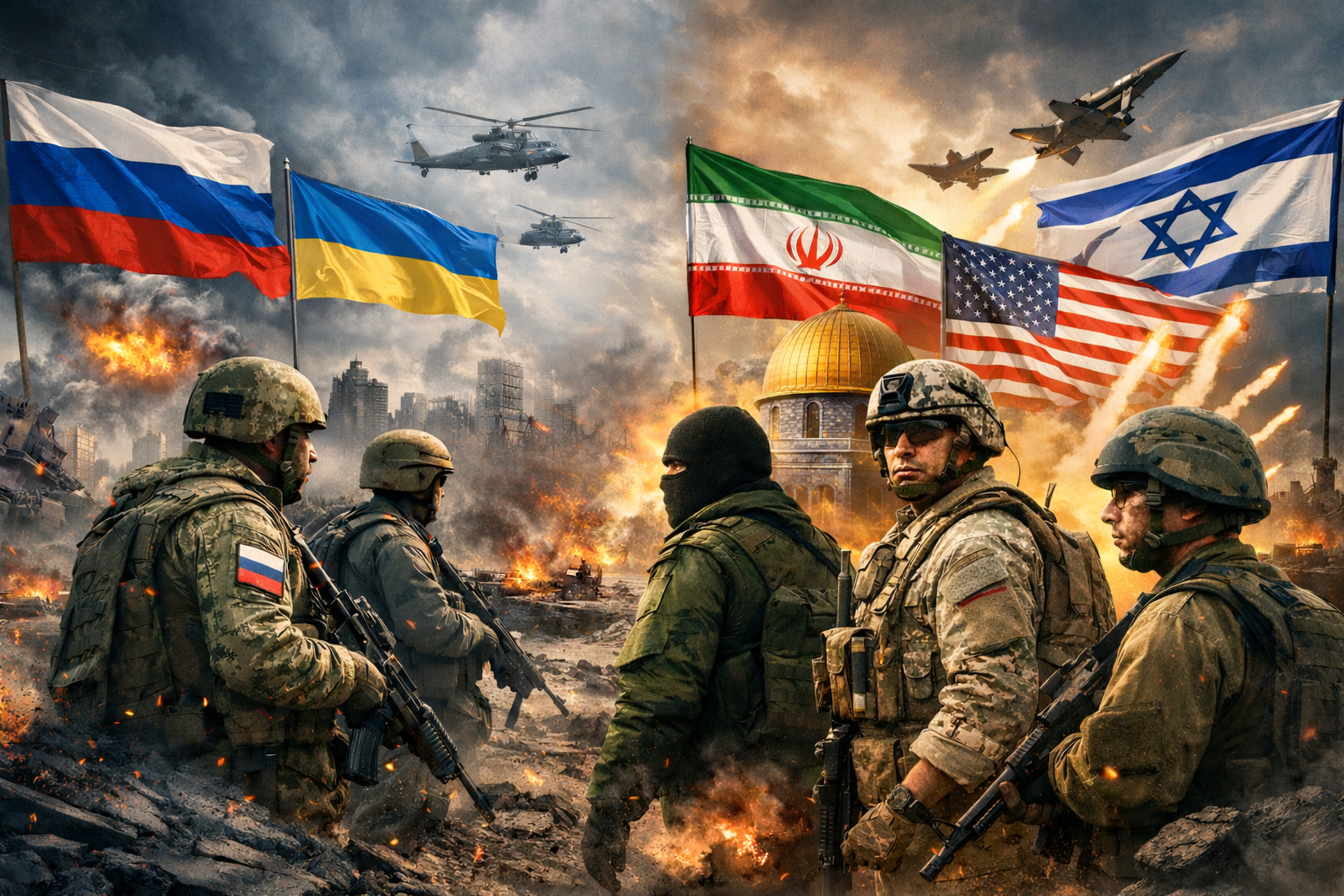
The familiar phrase that “the world is going through difficult times” is gradually losing its analytical value, turning into a rhetorical cliché. Yet behind it lies a deeper shift — a transformation in the very logic of international conflicts. Modern wars increasingly deviate from classical models with a clear beginning, climax, and resolution. Instead, they take on a prolonged, inertial character, shaping not only security dynamics but also exerting long-term influence on the global economy, energy markets, and political alliances.
The Russia–Ukraine war remains the most illustrative example of this transformation. Several years into the conflict, neither side has been able to achieve a decisive outcome, despite the scale of resources involved, external support, and the intensity of military operations. The conflict has settled into a state of strategic uncertainty: costs continue to rise, while prospects for resolution remain अस्पष्ट. As a result, the war has evolved from a discrete episode into a structural factor shaping both regional and European politics.
A similar dynamic can be observed in the tensions surrounding Iran. The confrontation involving Iran, the United States, and Israel — initially perceived as limited in scope and duration — has shown a clear tendency toward expansion and increasing complexity. The absence of a clear military or diplomatic outcome reinforces uncertainty, while secondary effects — from energy market volatility to disruptions in global logistics — extend far beyond the region.
Against this backdrop, there is a growing scarcity of cases in which military conflicts end quickly, with clearly defined political objectives achieved and subsequently institutionalized. It is precisely for this reason that Azerbaijan’s experience in 2020–2023 stands out as particularly noteworthy.
The 44-day campaign of 2020 distinguishes itself from most contemporary conflicts by its speed and effectiveness. Within a relatively short period, Baku was able to alter the balance of power on the battlefield and consolidate its gains through political and diplomatic mechanisms. This process was further completed by the 2023 operation, which marked the final stage in restoring control over the territories.
An analysis of this case suggests that its success cannot be explained solely in military terms. A critical factor was the coherence between political decision-making and strategic execution. Over an extended period, Azerbaijan combined participation in negotiation frameworks with a consistent articulation of its right to pursue a force-based solution within the framework of international law. This created a clear and predictable strategic line in which diplomacy and military planning were mutually reinforcing rather than contradictory.
Institutional coherence also played a decisive role. Objectives, resources, and instruments were aligned within a unified strategic framework. At a time when many conflicts become protracted due to misalignment between political aims and military actions, such coordination becomes critically important.
Another important element was the management of timing and decision-making. Unlike in conflicts characterized by strategic hesitation under external pressure, Baku’s actions were marked by consistency and a commitment to carrying operations through to their logical conclusion. This helped avoid a prolonged conflict scenario with escalating costs.
At the same time, the broader geopolitical environment cannot be overlooked. Azerbaijan operated within a complex landscape, balancing between the interests of major external actors, including Western countries and Russia. Nevertheless, it managed to achieve its core objectives without entering into direct confrontation with key players, demonstrating a high degree of diplomatic adaptability.
In this sense, Azerbaijan’s case represents a significant exception to the prevailing trend of protracted conflicts. It shows that a combination of clear political will, strategic coherence, and societal consolidation can enable rapid and decisive outcomes even in a complex geopolitical environment.
More broadly, this raises the question of whether such a model can be replicated. For now, most contemporary conflicts suggest the opposite — a shift toward prolonged, resource-intensive, and indeterminate confrontations. It is precisely in this context that the Azerbaijani case gains analytical significance as a rare example of an alternative trajectory in modern conflict dynamics.