

The geopolitical situation surrounding the South Caucasus and the broader Middle East is entering a period of growing uncertainty. Conflicts across the region, shifting alliances, and competing strategic interests are reshaping the political environment from the Eastern Mediterranean to the Caspian Sea.
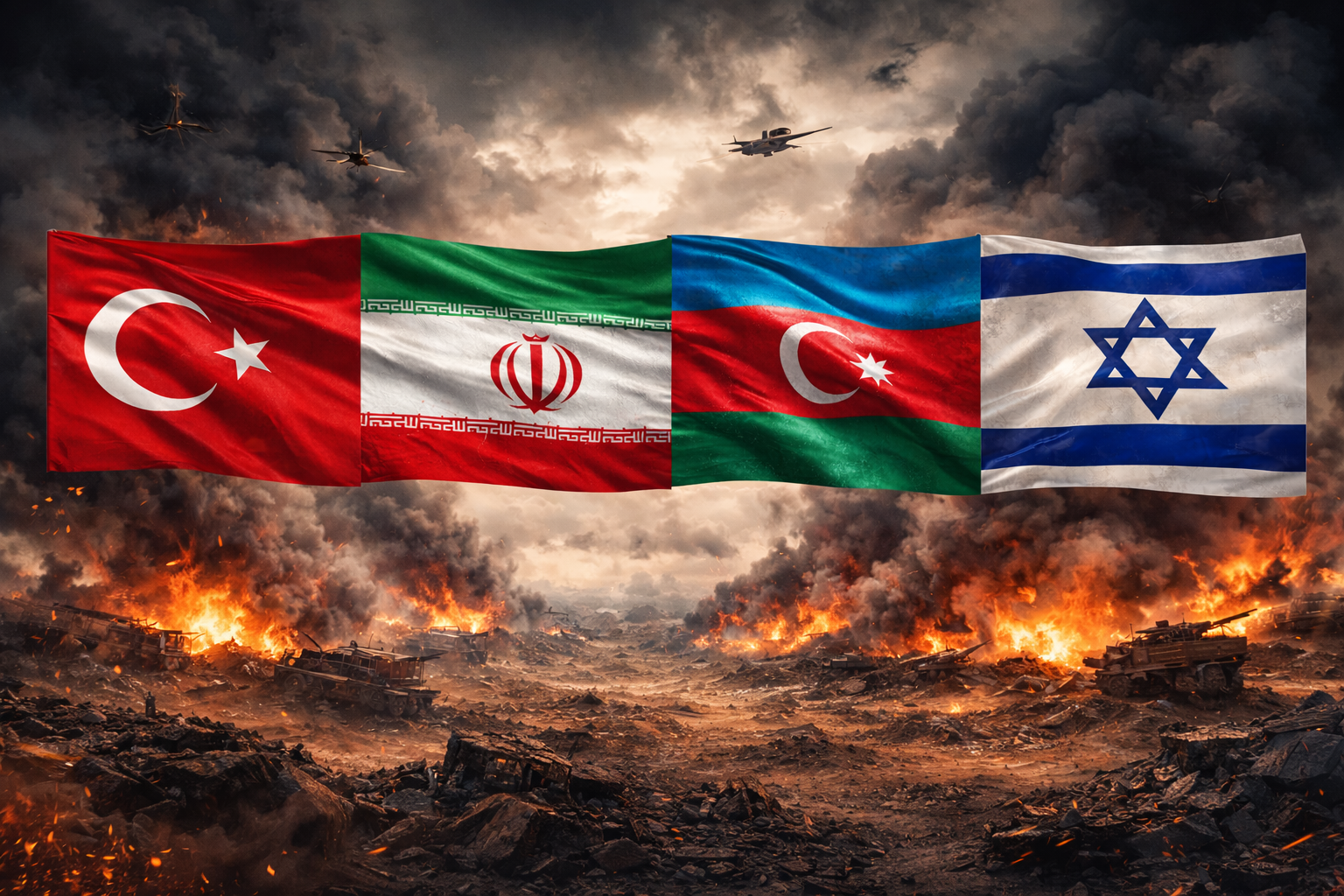
In this setting, Azerbaijan finds itself in a particularly delicate position. The country maintains a close alliance with Türkiye, expanding cooperation with Israel, and shares a long and complex border with Iran. Each of these relationships carries strategic value, yet they do not always align with one another. For Azerbaijan, the central task of foreign policy has therefore become maintaining workable relations with all sides while preserving its own strategic independence.
Since gaining independence in 1991, Azerbaijan has gradually built a foreign policy based on diversification rather than exclusive alignment. The partnership with Türkiye forms the backbone of the country’s security and political orientation. At the same time, Azerbaijan has developed extensive cooperation with Israel in areas such as defense technology, energy trade, agriculture, and innovation. Alongside these partnerships, Baku must also manage relations with Iran, a powerful neighbor whose strategic concerns frequently intersect with developments in the South Caucasus. Maintaining stability in these relationships requires careful diplomacy and a clear understanding of the region’s shifting political dynamics.
Cooperation between Azerbaijan and Israel has expanded steadily over the past three decades. Energy exports, technological collaboration, and defense cooperation form the foundation of this partnership. Israel has become an important supplier of advanced defense technologies, while Azerbaijan remains one of Israel’s significant energy partners. From Baku’s perspective, cooperation with Israel is part of a broader strategy to strengthen national capabilities and reduce dependence on any single external partner. Azerbaijani policymakers have nevertheless been cautious in managing this relationship, seeking to prevent it from becoming a direct source of confrontation with neighboring states.
Iran has long viewed Azerbaijan’s relations with Israel with suspicion. Iranian officials frequently interpret Israeli activity near their northern border as a potential security concern. Yet despite periodic political tensions, Tehran has generally avoided direct confrontation with Baku. One reason lies in Iran’s own internal realities. Several million ethnic Azerbaijanis live in the northern regions of the country and represent one of its largest ethnic communities. These communities play an important role in Iran’s economic and political life. Any serious conflict with Azerbaijan would therefore carry domestic political risks for Iran itself.
Regional considerations also encourage caution in Tehran. Azerbaijan maintains close strategic ties with Türkiye and has developed political and economic connections with Western states. A direct conflict between Iran and Azerbaijan could quickly attract wider international attention and destabilize the fragile balance of power in the South Caucasus. As a result, Iranian policy toward Azerbaijan has often combined strong rhetoric with relatively restrained practical steps.
Türkiye remains Azerbaijan’s closest strategic partner. The political, cultural, and military links between the two countries are exceptionally strong and are frequently described by both governments as relations between “one nation, two states.” Turkish diplomatic and political support during the 2020 Karabakh war reinforced the perception that Ankara and Baku act as closely coordinated partners in regional affairs. Cooperation between the two countries now extends across defense, energy, transportation, and regional security.
At the same time, Türkiye’s regional priorities do not always perfectly coincide with those of Azerbaijan. For Turkish policymakers, the Kurdish question remains one of the most sensitive national security concerns. Major instability inside Iran or the weakening of Iranian state institutions could strengthen Kurdish political movements across the region. This possibility explains why Ankara often approaches developments involving Iran with a degree of caution. For Türkiye, preserving regional stability sometimes takes precedence over more confrontational approaches.
In recent months, criticism of Azerbaijan has appeared in segments of the Turkish media and on social media platforms. Some commentators have argued that Azerbaijan has moved too close to Israel or that Baku risks becoming overly associated with Israeli regional policies. In a few discussions, voices in the Turkish media have even suggested that Türkiye should reconsider automatic support for Azerbaijan if tensions between Baku and Tehran were to escalate.
Such statements have attracted attention in Azerbaijan because they contrast with the long history of cooperation between the two countries. Azerbaijan and Türkiye have built their relationship over decades on mutual political support and strategic coordination. For this reason, many observers in Baku view the recent criticism as part of internal political debate within Türkiye rather than a signal of any change in official Turkish foreign policy.
Several factors help explain why these narratives have gained visibility. Public discussion in Türkiye has been strongly influenced by developments in the Middle East, particularly the war in Gaza and the broader Israeli-Palestinian conflict. For some political groups and commentators, attitudes toward Israel have become an important political marker. Within this environment, Azerbaijan’s cooperation with Israel is sometimes interpreted through ideological or emotional frameworks rather than purely strategic considerations.
The structure of the Turkish media environment also plays a role. Political groups with nationalist, religious, or strongly anti-Western views are active participants in public debate and often use sharp language when discussing regional politics. Social media platforms amplify these voices, since emotionally charged commentary tends to circulate quickly. In this way, a limited number of strong opinions can appear more widespread than they actually are.
Another question occasionally raised by analysts concerns the possibility of tension between Israel and Türkiye themselves. Although relations between the two countries periodically deteriorate at the political level, the likelihood of direct military confrontation remains relatively low. Both countries possess significant military capabilities and understand that open conflict would create serious instability across the Eastern Mediterranean and the broader Middle East.
Nevertheless, even the possibility of serious tension between Israel and Türkiye would place Azerbaijan in a difficult position. Baku maintains close strategic ties with Türkiye while simultaneously cooperating with Israel in areas important to its national security. In such circumstances, Azerbaijan would likely attempt to avoid choosing sides. Instead, it would try to maintain balanced relations with both partners while reducing the risk of becoming drawn into a broader geopolitical confrontation.
Russia also remains an important actor in the regional strategic environment. Moscow follows developments in the South Caucasus closely and generally prefers stability in the region. A serious escalation involving Iran, Azerbaijan, or other regional actors could disrupt existing political arrangements and invite additional external involvement. Russia therefore has a strong interest in preserving transportation links, economic cooperation, and political stability across the region.
For Azerbaijan, the central challenge in the coming years will be preserving diplomatic flexibility in an increasingly polarized environment. The alliance with Türkiye will continue to serve as the foundation of the country’s security framework. Cooperation with Israel and Western partners will remain important for technological development and defense modernization. At the same time, maintaining stable communication with Iran will remain essential in order to avoid unnecessary escalation along Azerbaijan’s southern border.
Azerbaijan’s experience since independence shows that careful diplomacy can allow smaller states to operate successfully even in complicated geopolitical environments. Rather than aligning rigidly with any single bloc, Baku has attempted to maintain relations with multiple partners while protecting its own national interests.
This approach requires patience and constant adjustment as regional conditions evolve. Yet it has allowed Azerbaijan to preserve a degree of strategic autonomy that many states in similarly complex environments struggle to maintain. In a region often marked by sharp rivalries and rigid alliances, Azerbaijan’s ability to balance competing relationships may remain its most valuable geopolitical asset in the years ahead.