


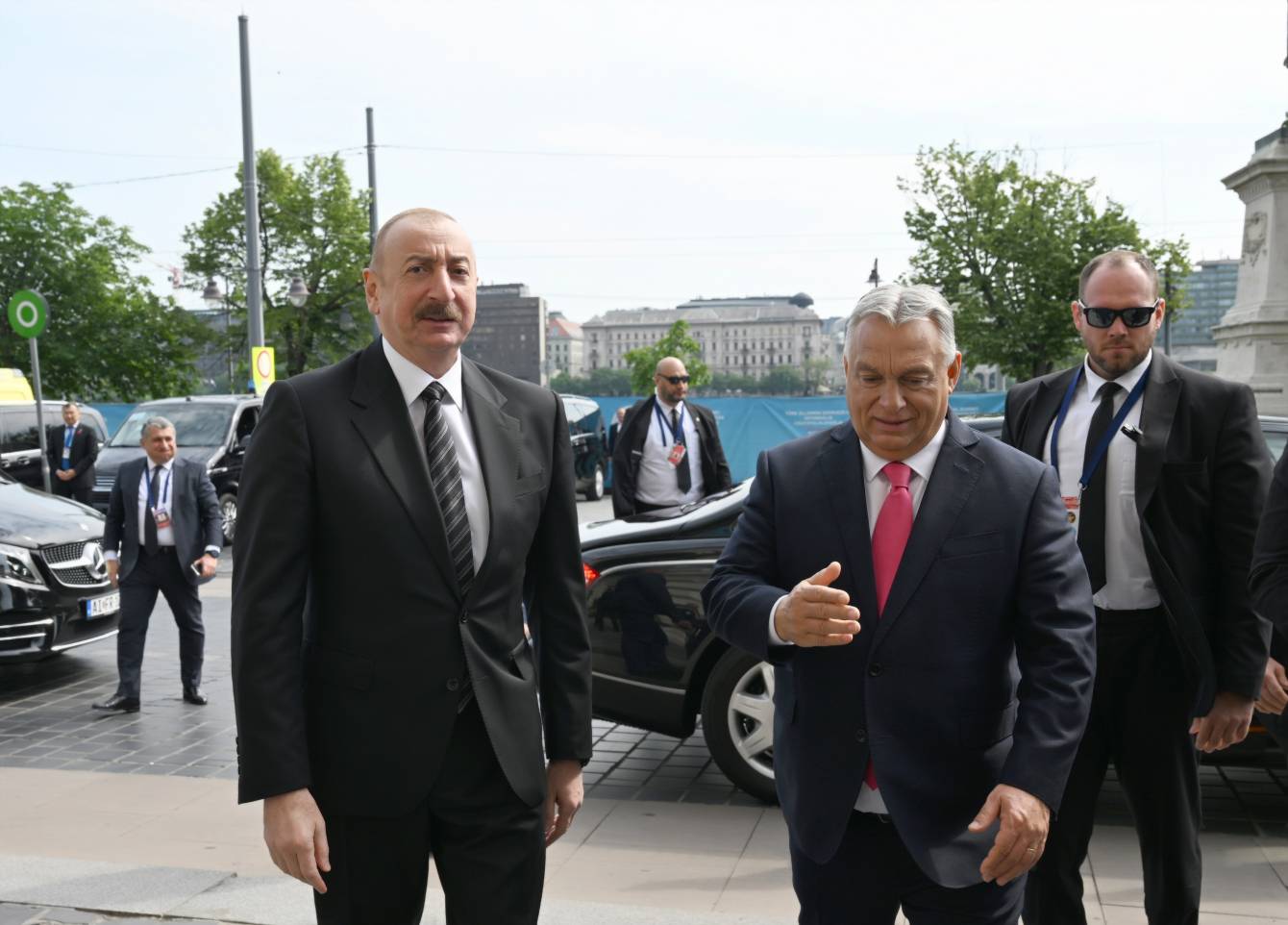
President Ilham Aliyev’s visit to Hungary on May 20–21, 2025, timed to coincide with the informal summit of the Organization of Turkic States (OTS) in Budapest, marked a continuation of the consistent policy of rapprochement between the two countries. Though the summit served as the formal occasion for the trip, the visit’s significance extended far beyond a single diplomatic event. It confirmed that Azerbaijan and Hungary are not only building a stable bilateral partnership but are also shaping a broader political and economic alignment based on strategic autonomy, energy cooperation, and shared civilizational sensitivity.
In recent years, Hungary has become Azerbaijan’s key partner within the European Union. Against the backdrop of deepening ideological polarization in Europe, Budapest and Baku have consistently supported each other in defending sovereignty, non-interference in domestic affairs, and the pursuit of a multi-vector foreign policy. Despite being a member of both the EU and NATO, Hungary remains committed to deepening its ties with Türkiye, the Central Asian republics, and Azerbaijan. This positioning makes Hungary a unique actor capable of building bridges between Europe and the Turkic world. For its part, Azerbaijan views Hungary not only as a pragmatic energy partner but also as a political ally in promoting alternative forms of international cooperation.
Energy remains the foundation of bilateral cooperation. In recent years, the partnership has expanded beyond the classical model of energy supply. Hungarian companies such as MOL Group and MVM hold shares in Azerbaijan’s largest oil and gas projects, including Azeri-Chirag-Gunashli and Shah Deniz, and in 2024 a new agreement was signed for the development of the onshore Shamakhi-Gobustan field. In total, Hungary’s investments in Azerbaijan’s energy sector have exceeded $2 billion, making MOL one of the country’s largest foreign investors. The 2023 gas supply agreement between SOCAR and MVM for 100 million cubic meters of gas, as well as Hungary’s involvement in the “Solidarity Ring” (STRING) infrastructure project alongside Bulgaria, Slovakia, and Romania, have created the technical capacity for exporting Azerbaijani gas to Central Europe via the Southern Gas Corridor.
In the context of the ongoing war in Ukraine, Hungary has increasingly highlighted the importance of Azerbaijani gas for its own energy security. Prime Minister Viktor Orbán has openly stated that without support from the Turkic states, Hungary would have faced even greater economic losses. Azerbaijan, for its part, has confirmed its ability to meet Hungary’s full natural gas needs.
A new dimension of the bilateral agenda is the development of green energy cooperation. Hungarian companies are actively involved in Azerbaijan’s renewable energy sector, including solar power and energy storage infrastructure. The Hungarian Battery Association has held talks with SOCAR’s green energy subsidiaries. One of the most ambitious joint initiatives is the Green Energy Corridor project, launched in partnership with Georgia and Romania. The project envisions the construction of a 1,195-kilometer subsea cable under the Black Sea, with a capacity of 1 GW, to supply up to 4 GW of electricity annually to Europe. A ministerial meeting in Budapest in March 2025 marked a key milestone for the project, which is being managed by the newly established Green Energy Corridor Power Company. Feasibility studies by the Italian firm CESI are expected to be completed by the end of the year. If the project is included in the EU’s list of Projects of Common Interest, it could be eligible for €2.3 billion in financing.
Parallel to energy cooperation, Azerbaijan and Hungary are also expanding their non-oil trade and investment ties. Hungarian businesses are active in food processing, logistics, transportation, and pharmaceuticals. Around 20 Hungarian companies currently operate in Azerbaijan. Bilateral trade reached $200 million in 2023, growing by 29%, with further increases recorded in early 2025. One of the flagship joint ventures is a $211 million aluminum can factory being built in the Alat Free Economic Zone by Hell Energy and the Azerbaijan Investment Company. The plant will have a production capacity of up to 800 million cans per year and create over 300 jobs. Additional projects under consideration include Hungarian involvement in bus manufacturing.
Hungarian companies are also participating in the reconstruction of Azerbaijan’s Karabakh region. The KESZ Group is building residential housing in the liberated village of Soltanly in the Jabrayil district for approximately 6,000 people, and the Hungarian government is financing the construction of a school in the same area. These efforts show that cooperation between Baku and Budapest extends beyond economic interests and includes elements of humanitarian support and post-conflict recovery.
The high level of coordination between the two capitals is reinforced not only by the personal relationship between Ilham Aliyev and Viktor Orbán but also by a shared interpretation of global trends. Both countries express skepticism toward escalating sanctions, military involvement in regional conflicts, and external pressure on domestic policymaking. For Azerbaijan, support for Hungary’s foreign policy course is not merely symbolic but reflects political solidarity between states that, while not at the core of Europe, are forging a resilient and pragmatic alignment within the broader European-Eurasian space.
President Aliyev’s visit to Budapest reaffirmed that the bilateral relationship has matured into a sustainable regional model. Azerbaijan and Hungary are not only energy partners but also contributors to a new configuration in Eurasia—one defined by logistical connectivity, strategic sovereignty, and a shared interest in stable, flexible international relations. As the global order continues to evolve, partnerships of this nature may prove essential for building future systems of cooperation and resilience.