

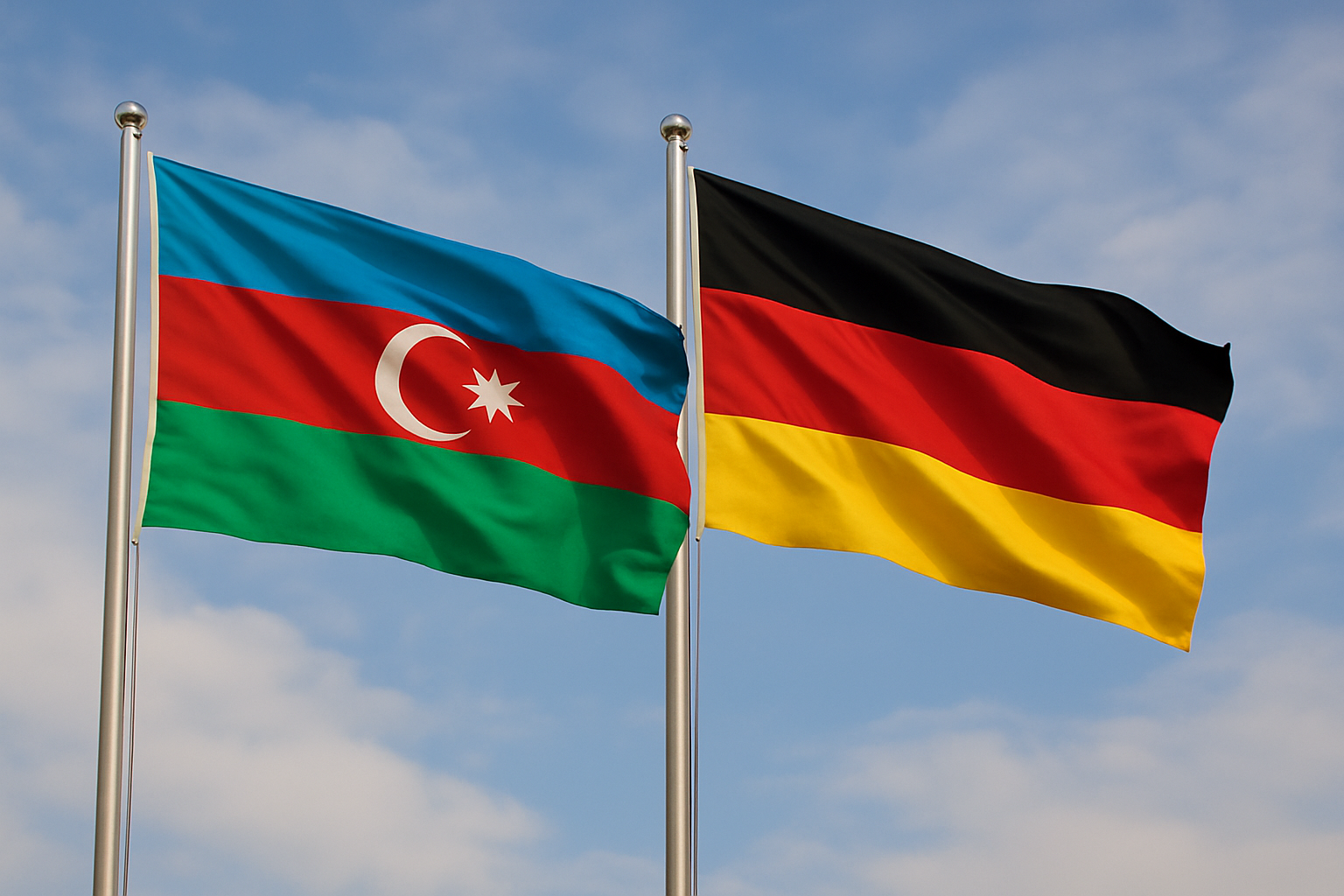
Germany’s role in Azerbaijan’s energy strategy is becoming increasingly solid and systemic. Today, almost a quarter of the supplies delivered through the Southern Gas Corridor go to the German market, forming the basis for long-term strategic cooperation. SOCAR’s long-term contracts with Uniper and SEFE provide for an annual import of around three billion cubic meters, equivalent to roughly one quarter of Azerbaijan’s total supplies to the European Union. These agreements not only secure Germany’s place among the key buyers of Azerbaijani gas but also demonstrate Baku’s ability to integrate reliably into Europe’s energy system under turbulent conditions.
The agreement with Uniper, which came into force in December 2020 for a term of 25 years, guarantees deliveries of at least 1.5 billion cubic meters annually. A second tranche of supplies is provided through SEFE, which, after being nationalized in 2022, received a mandate to diversify Germany’s gas imports. In June 2025, SEFE and SOCAR signed a ten-year agreement for an additional 1.5 billion cubic meters per year. Deliveries have already begun via Italy, the terminal point of the Southern Gas Corridor. To optimize the implementation of this contract, swap schemes with several other European countries are being considered, which could enhance the flexibility and resilience of the logistics model in the long term.
These developments take place against the backdrop of record Azerbaijani gas exports: in 2024, volumes reached 25.3 billion cubic meters, of which 13 billion were directed to the EU. In just two years, exports to Europe rose by more than 50 percent, achieved entirely through Azerbaijan’s own resources. Amid the energy crisis triggered by the Russia–Ukraine war, Azerbaijan emerged as one of the few reliable suppliers, avoiding disruptions and reinforcing its reputation as a responsible partner.
At the same time, Baku is laying the groundwork for a long-term energy transition. The Southern Gas Corridor is being positioned as infrastructure adaptable for future hydrogen transport, while the country is implementing projects for wind and solar power plants with a combined capacity of more than 10 gigawatts. This underscores that gas cooperation with the EU does not exclude but rather complements the “green” agenda. For Azerbaijan, Germany in this context is seen not only as a major importer but also as a European leader in renewable energy, whose expertise Baku regards as an important resource for transforming its own energy model. It is not excluded that after the planned privatization of SEFE in 2028–2029, the parameters of supply and the nature of the partnership may be revised toward expansion.
The broad geography of Azerbaijani exports underlines the diversified character of its energy strategy. Beyond Germany, key buyers include Italy and Bulgaria, as well as Greece, Romania, Hungary, Croatia, Serbia, Slovenia, Slovakia, and North Macedonia. Outside the EU, long-standing partners remain Türkiye and Georgia, both of which began importing Azerbaijani gas back in 2007. Meanwhile, demand for Azerbaijani “blue fuel” continues to rise: fourteen countries have expressed interest in an additional 14 billion cubic meters beyond current contracts. Official Baku, however, consistently insists on long-term agreements of at least ten years, reflecting the need for strategic planning. Over the next five years, Azerbaijan intends to increase exports by another 8 billion cubic meters, further strengthening its position as one of the key and reliable players on Europe’s energy market.