

In European political rhetoric, the language of “human rights” and “democratic standards” has long acquired an almost ritualistic character. Reports, statements, resolutions and recommendations adopted by various institutions are usually presented as expressions of principle and commitment to values. Yet in practice, many of these documents are increasingly perceived not as instruments of dialogue, but as mechanisms of political pressure.
This is particularly evident in the case of Azerbaijan. For years, Baku has faced almost the same set of accusations: “problems with democracy,” “pressure on civil society,” “restrictions on freedom of speech,” “political prisoners,” as well as criticism of judicial proceedings against representatives of the Armenian side accused of serious crimes. The wording may change slightly, but the logic remains the same.
The latest resolution adopted by PACE once again confirmed this pattern. The document expresses “deep concern” over the human rights situation, the condition of journalists and civil society, and refers to the existence of so-called political prisoners. For Baku, such rhetoric has long ceased to be surprising. The Azerbaijani side quite predictably described the document as biased, politically motivated and of no practical significance for the country.
It is also noteworthy that an almost parallel resolution was adopted with regard to Georgia. It speaks of Tbilisi’s alleged departure from democratic standards, calls for the repeal of several laws described by European institutions as “repressive,” and urges an end to pressure on the opposition. The wording largely mirrors the Azerbaijani case. In both instances, these are not legally binding decisions, but political statements. Still, such statements shape the broader atmosphere of relations.
At first glance, these documents could be dismissed as part of the familiar bureaucratic activity of European institutions. Today, however, their consequences go far beyond symbolic politics. They touch upon a much broader issue: Europe’s ability to build a coherent and sustainable strategy in Eurasia.
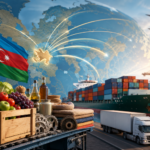
In recent years, the European Union has increasingly emphasized the importance of the Middle Corridor — a transport route connecting Central Asia with Europe through the Caspian Sea, Azerbaijan, Georgia and Türkiye. Following dramatic shifts in the global geopolitical environment, this route has acquired special significance for Europe. It is viewed as an alternative to northern routes through Russia and as a more independent land-sea corridor at a time when traditional logistics routes are becoming increasingly vulnerable.
This is where the central paradox of European policy emerges. On the one hand, Brussels speaks of the strategic importance of the Middle Corridor, the need for investment, infrastructure development and stronger transport links between Europe and Central Asia. On the other hand, European institutions regularly adopt political documents directed against Azerbaijan and Georgia — two countries without which this corridor simply cannot function.
Of course, no one questions the right to constructive criticism. Any state can and should be subject to careful analysis, especially when issues of governance, justice or public freedoms are involved. The problem begins when criticism loses balance, turns into a political template and ignores the real interests of interdependence. In such cases, it no longer strengthens dialogue; it erodes trust.
In Baku and Tbilisi, such resolutions are perceived not as concern for standards, but as interference in domestic affairs and an attempt at external pressure. This perception cannot simply be ignored. In international politics, intentions matter, but so does how those intentions are interpreted by partners. If Europe wants to be not an outside observer but a full participant in regional processes, it must take into account the political sensitivities of the countries through which key transport and energy routes pass.
Azerbaijan’s role in the Middle Corridor is structural. Without it, it is impossible to connect Central Asia and the Caspian region with the South Caucasus. Major transport and energy flows pass through Azerbaijan, including routes across the Caspian Sea, railway infrastructure and the Baku International Sea Trade Port.
Georgia’s role is equally significant. It provides access to the Black Sea and onward to Europe. Georgian railway, port and transit infrastructure is an integral part of the entire route. Excluding Tbilisi from the equation is as impossible as building the Middle Corridor without Baku.
This raises a very simple question: how can Azerbaijan and Georgia be described as strategically important partners while political pressure on them is simultaneously increased through resolutions and statements that these countries themselves regard as biased?
European experts and external observers increasingly acknowledge that if the EU does not become more actively involved in the development of the Middle Corridor, this route will take shape without it. In other words, Europe risks becoming not the architect of a new Eurasian transport space, but merely one of its users.
The countries of the region, meanwhile, are not waiting for Brussels to define its strategy. Azerbaijan and Georgia are developing cooperation with Türkiye, Kazakhstan and other regional states, turning the Middle Corridor into a more self-sufficient system. Interest is also growing from China, the Gulf states and other centers of capital that view transport infrastructure primarily as an economic and strategic asset, not as a platform for ideological demonstrations.
For Europe, this creates a serious challenge. Participation in the Middle Corridor depends not only on investments, technical projects and declarations of interest. It requires stable political relations with the states through which the route passes. It is impossible to rely on strategic logistical interdependence while treating partners as permanent objects of political instruction.
If pressure from European institutions continues, Baku and Tbilisi may increasingly rely on more pragmatic instruments to protect their interests. This may not necessarily take the form of loud political demarches. It may instead appear as a gradual adjustment of transit conditions, a revision of tariff policies, a shift in priorities regarding access to infrastructure capacity, and a stronger orientation toward alternative partners.
Such a scenario does not need to be formally presented as a direct response. In modern logistics, much is decided through tariffs, access to capacity, the speed of approvals, investment preferences and long-term contracts. This is precisely why the political atmosphere has practical importance. It influences who receives priority, who participates in projects at an early stage, and who arrives only after the rules of the game have already been shaped by others.
This is the essence of Europe’s paradox. By trying to maintain both moral-political pressure and strategic participation in the Middle Corridor, Europe may accelerate the very process that reduces its own role. The center of decision-making in Eurasian logistics is increasingly shifting toward the states through whose territories the route physically passes.
In the twenty-first century, the winner is not the actor that adopts the greatest number of resolutions, but the one that can build resilient supply chains, trusted partnerships and long-term infrastructure alliances. If Europe truly regards the Middle Corridor as a strategic project, it will have to choose between political inertia and real geo-economic responsibility. That choice can no longer be postponed.